
How to Size a Waterproof Beach Cooler Bag for Any Trip
Last Updated: November 24, 2026
Quick Summary
Size a waterproof beach cooler by group size, trip length, ice needs and carry distance, not by the label. Buy for the can count you need after ice, since ice and ice packs cut usable space by roughly a quarter to a third. Fill one quarter to one third of the bag with ice.
- A 12-can bag packed with ice and snacks lands around 8 to 9 usable cans.
- Measure internal length, width and height, then compare to the advertised capacity.
- Leave roughly an inch of clearance below the closure line so the seal engages fully.
- A full large bag can be heavy to carry across soft sand, so size to your usual trip.
- Waterproof means water cannot get in even when submerged; water-resistant only shrugs off splashes.
Table of Contents
- Why Beach Cooler Sizing Starts With the Trip, Not the Label
- How Many Cans Fit in a Cooler Bag (and Why the Number Shrinks on the Sand)
- Cooler Bag Dimensions: Usable Space vs. Advertised Capacity
- Matching Cooler Bag Size for a Day Trip, Weekend or Family Outing
- The Ice-to-Food Ratio for Cooler Bags in Hot Beach Weather
- Waterproof vs. Water-Resistant: What the Label Actually Means
- Carry Weight and Getting the Cooler From Car to Sand
- Pick Your Beach Cooler Bag and Pack It Right
- Frequently Asked Questions
Why Beach Cooler Sizing Starts With the Trip, Not the Label
Most people buy a beach cooler bag by reading the sticker on the box. That is the wrong place to start. At CampSummitCo, we think the trip should decide the bag, not the other way around.
A cooler bag is a soft-sided insulated tote that keeps food and drinks cold for a set number of hours. The right one for a solo sunrise swim is not the right one for a family of five staying until sunset.
Here is the core idea: how to size a waterproof beach cooler bag depends on four things.
- How many people are eating and drinking
- How long you will be on the sand
- How much ice or ice packs you need
- How far you must carry it
Get those four right and the label almost picks itself.
How Many Cans Fit in a Cooler Bag (and Why the Number Shrinks on the Sand)
A cooler bag's can count is measured with drinks alone and no ice. Add ice and the real number drops fast. That gap is the single biggest surprise for first-time buyers.
Picture a bag rated for 12 cans. That rating assumes the bag is packed with cans only. Drop in a bag of ice and you lose space to the ice itself. On a hot beach, you want that ice. So plan for fewer cans than the label promises.
Use this simple rule:
- Drinks only, no ice: trust the label can count
- Drinks plus a small ice pack: subtract about a quarter of the can count
- Drinks plus loose ice: subtract closer to a third
So a 12-can bag packed with ice and a few snacks lands around 8 to 9 cans of usable space. That is still a great day out for two people.
The lesson: buy for the can count you need after ice, not before. If your group drinks 12 cans over an afternoon, size up.
Cooler Bag Dimensions: Usable Space vs. Advertised Capacity
Advertised capacity is a volume number. Usable space is what actually fits once the walls, lining, insulation, seams, and closure take their share.
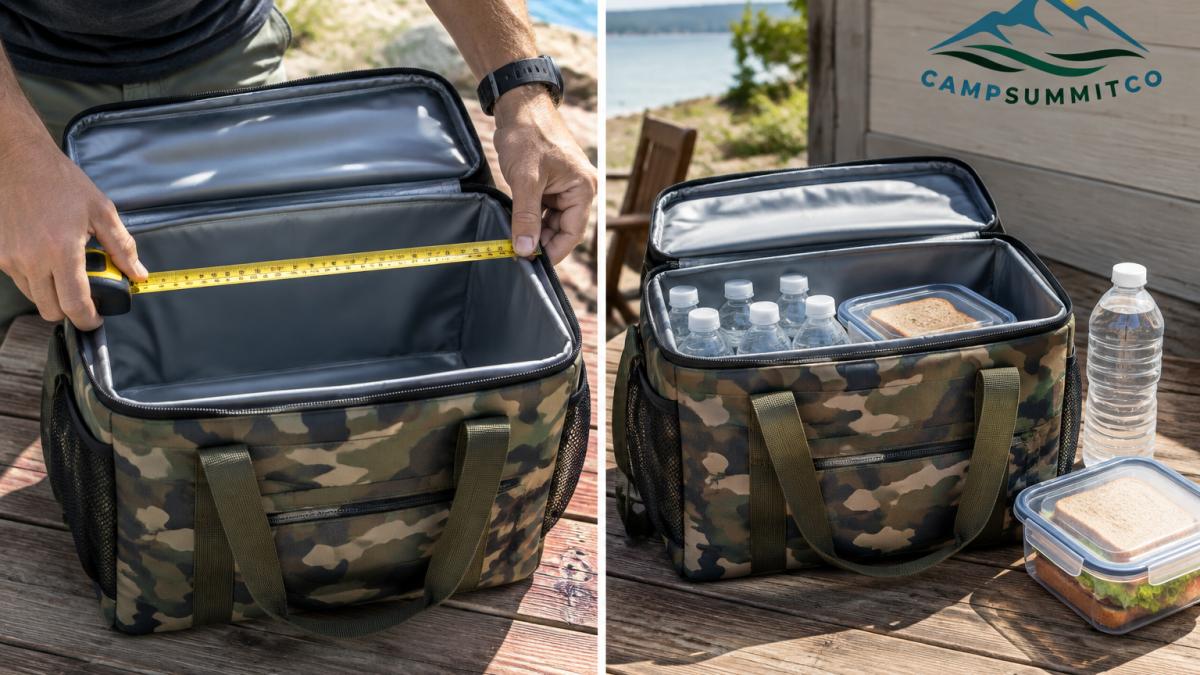
A bag listed at a certain size has insulated walls, and those walls take up part of the inside. The space you can actually pack is smaller than the outside suggests.
So measure the inside, not the outside. Here is how.
- Open the bag flat and look at the inner lining.
- Measure the internal length, width, and height with a tape at the widest and tallest points.
- Multiply length by width by height to get internal volume in cubic inches or liters.
- Compare that to the advertised number on the label.
- Check the shape: tall and narrow fits bottles; wide and shallow fits food containers.
That last point matters more than most guides admit. Equal-volume loads can require different bag dimensions. A tall bag holds upright water bottles and thermoses well.
Closure design also changes usable space. A magnetic auto-sealing double-lock closure or a roll-top needs a clean sealing zone at the top, so you cannot pack items right to the brim.
Seams and corner radii matter too. Rounded corners waste space for boxy containers, while square corners waste space for round bottles.
If you are weighing a dry bag for paddling trips too, our guide on how to choose a dry bag size for kayaking digs into how advertised capacity compares to real usable space.
Matching Cooler Bag Size for a Day Trip, Weekend or Family Outing
Match the bag to the trip length and the group, not to the biggest number you can afford. A bag that is too big is heavy and wastes ice. A bag that is too small runs out of cold by mid-afternoon.
Here is a quick reference for group size and trip length.
| Trip Type | Group Size | Suggested Capacity | Ice Allowance |
|---|---|---|---|
| Solo day trip | 1 person | Small, around 8-12 cans | 1 small ice pack |
| Couple's beach day | 2 people | Medium, around 12-18 cans | 1-2 ice packs |
| Family outing | 3-5 people | Large, around 24-36 cans | Loose ice plus packs |
| Full weekend | 2-4 people | Large, 36+ cans | Heavy ice, refill plan |
Small coolers suit solo use and short trips. They are light and easy to carry.
Medium coolers are the sweet spot for a couple's beach outing. They hold lunch, drinks, and ice without becoming a burden.
Large coolers fit family outings and full days. They hold more, but they weigh more when full.
A full large bag can be heavy to carry across soft sand. Size to the trip you actually take most often.
The Ice-to-Food Ratio for Cooler Bags in Hot Beach Weather
Hot weather is the enemy of cold food. The ice-to-food ratio is how much cooling space you give up to keep the rest cold. Get it wrong and lunch goes warm by noon.
A practical starting point is to fill roughly one quarter to one third of the bag with ice or ice packs. On a very hot beach, push toward one third. In mild weather, one quarter is enough.
Every time you open the lid, warm air rushes in, so every opening costs you cooling time.
A few habits protect your cold:
- Pre-chill drinks and food before packing
- Use ice packs or ice blocks instead of loose ice where you can
- Keep the lid closed between servings
- Pack cold items tight together to share the cold
- Add a layer of ice on top, since cold sinks
For longer beach days, bring a second small bag for snacks. Opening the main bag less often keeps the core cold longer.
Watch out: loose ice melts into water that soaks food and adds weight. Use sealed ice packs or a drain-friendly setup if you pack loose ice.
Waterproof vs. Water-Resistant: What the Label Actually Means
Waterproof means water cannot get in, even when the bag is submerged or soaked. Water-resistant means the bag shrugs off splashes and light rain but will let water in under pressure or prolonged soaking.
That difference matters on a beach. A wave, a spilled cooler, or a wet towel can test the label fast.
Look for a clear waterproof rating. An IP rating tells you how well a bag keeps water out.
Water-resistant bags are fine for a dry, calm day. They are not fine for surf, spray, or a bag that might get dunked.
If you want to check a bag's seal before you trust it, our guide on how to test a waterproof dry bag seal walks through a simple test. And if a seal ever fails, how to repair a waterproof bag with a repair kit shows how to bring the waterproofing back.
A waterproof beach cooler bag earns its name when it keeps both the cold in and the water out. That is the standard to hold it to.
Carry Weight and Getting the Cooler From Car to Sand
A cooler bag gets heavy once it is full. The walk from the car to the sand is where a bad choice shows up in your shoulder.
Empty weight is only part of the story. A bag that weighs a couple of pounds empty can weigh many times that when packed with drinks, food, and ice.
Plan the carry before you pack:
- Weigh the bag once it is full, or estimate it from the contents
- Check for a padded shoulder strap and sturdy handles
- Choose a bag you can carry in one trip
- Pack heavy items low and close to your body
- Bring a friend or a cart for large family bags
Carry style changes the practical size limit. A single thin top handle concentrates load on your fingers and becomes painful within a short distance.
Walking distance is the variable most buyers ignore. A large bag that is fine for a 50-yard walk from the parking lot becomes a burden across 200 yards of soft sand.
A bag with a shoulder strap and side handles is far easier to move across sand than one with a single thin handle. Small details decide whether the walk is easy or a chore.
Pick Your Beach Cooler Bag and Pack It Right
Here is where it all comes together. Size by trip, then pack by the ice rule. Do both and your beach day stays cold and light.
Our pick for most beach days is the Waterproof Floating Cooler Bag - Bottomland Camo.
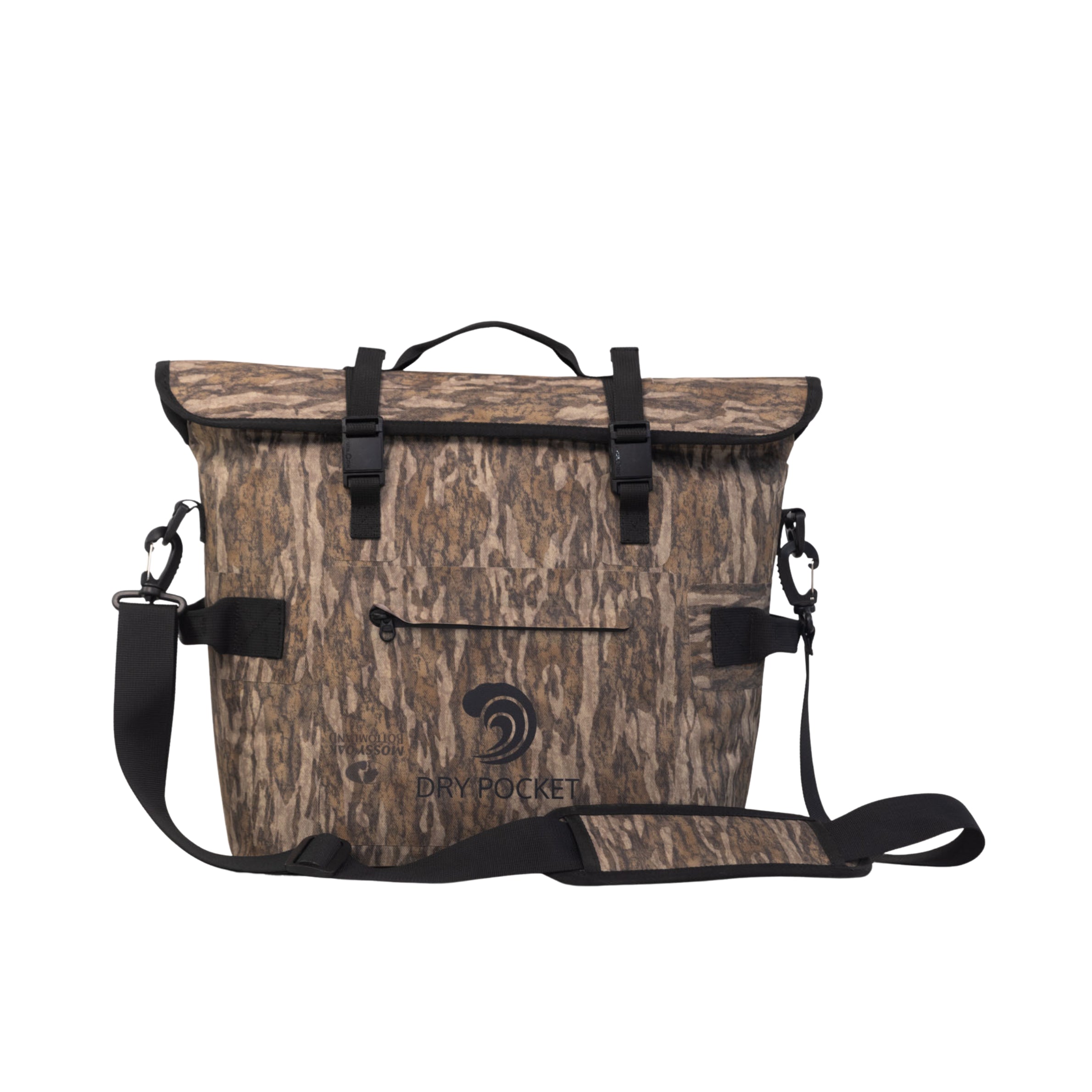
- True waterproof shell: a durable TPU shell with a magnetic auto-sealing double-lock closure rated IPX8, airtight and waterproof
- Holds ice for over 24 hours (depending on application)
- 12-can capacity with no ice, so size your ice and snacks around that
- Lightweight at 2.5 lbs empty, with a removable padded shoulder strap, two hand grabs on the side, and one on the top
- Floats, so a dropped bag stays on the surface
It also works as a dry bag, lunch box, or shell bag, which makes it a flexible choice for beach trips and beyond.
Pack it in this order:
- Pre-chill drinks and food.
- Line the base with ice packs.
- Stand bottles and cans upright.
- Pack food in the middle, tight together.
- Add ice or a pack on top.
- Seal the closure and check it is airtight.
- Carry it by the shoulder strap to the sand.
When you are ready to finish your kit, our best waterproof gear for beach trips guide rounds out the rest.
Sizing a beach cooler bag is not about chasing the biggest number. It is about matching capacity to your group, your trip length, and your ice.
CampSummitCo builds gear for people who move with purpose.
Get started with CampSummitCo and carry a cooler that keeps its cold and keeps out the water.
Frequently Asked Questions
How do I know what size cooler I need for a beach day?
Start with headcount and hours. For a solo or couple day trip, a small soft-sided bag in the 10 to 15 litre range covers drinks and lunch. A family of four usually needs 20 to 30 litres, and a full group outing pushes past 30. Then add ice volume on top: in hot weather, ice can take up a third of the bag. If the math lands between two sizes, size up rather than squeezing everything in, because a packed-solid cooler holds cold air poorly.
How many cans fit in a cooler bag?
A 12-can cooler bag holds 12 standard cans with no ice, which is the figure most listings quote. Once you add ice or ice packs, expect that number to drop by roughly a third. A 12-litre bag typically fits around 12 to 15 cans without ice. Always check whether the stated can count assumes an empty bag or a packed one, because the difference changes what you can actually bring to the beach.
What size waterproof beach cooler bag is best for a family beach day?
For two adults and two kids with a full afternoon on the sand, look at 20 to 30 litres of usable space. That covers drinks, sandwiches, fruit and a bag of ice without crushing everything. Check internal dimensions against your tallest water bottle and widest food container before buying, and remember that a soft-sided bag with a padded shoulder strap is far easier to carry across soft sand than a rigid cooler.
How do I measure a cooler bag's capacity?
Ignore the advertised litres first and measure the inside. Multiply internal length by width by depth in centimetres, divide by 1,000, and you get usable litres. Compare that to the stated capacity: insulation walls eat into the space, so a bag labelled 20 litres may offer closer to 15 litres of usable room. Then test with real items, like a water bottle standing upright and a lunch container laid flat, to see how shapes fit.
