
Waterproof Gear Maintenance for Hikers: A Step-by-Step Guide
Quick Summary
Waterproof gear maintenance means washing your gear with a technical cleaner, rinsing it thoroughly, and re-treating the DWR finish when water soaks in instead of beading. Clean fabric repels water better, breathes better, and lasts longer. Avoid detergent, fabric softener, and high heat.
- Use a technical cleaner made for waterproof fabrics, not household detergent or fabric softener.
- Rinse the jacket two or three times until no suds remain, since residue causes most water repellency failures.
- Re-treat the DWR when water soaks into the fabric instead of beading off.
- Air-dry gear in the shade, because high heat can damage membranes and seam tape.
- Inspect seams, zippers and seals once a year and repair them as needed.
Table of Contents
- Why Waterproof Gear Maintenance Matters for Hikers
- Checklist: The Supplies You Need for Rain Gear Care
- How to Wash a Waterproof Jacket Without Damaging It
- DWR Treatment for Hiking Gear: When and How to Restore Water Repellency
- How to Re-Waterproof a Rain Jacket Step by Step
- Drying, Storing and Troubleshooting Wetting-Out and Leaks
- Your Waterproof Gear Maintenance Schedule Before Your Next Trail
- Frequently Asked Questions
Why Waterproof Gear Maintenance Matters for Hikers
Waterproof gear only works when it is clean and properly treated.
Most hikers buy good gear and then neglect it. Dirt, body oils, sunscreen and insect repellent build up on the surface and clog the fabric's breathability.
Here is what good maintenance protects:
- Water resistance: Clean fabric repels water better than dirty fabric
- Breathability: Oils and residue block the membrane's ability to move sweat out
- Seal integrity: Dirty roll-top closures and zippers lose their grip over time
- Lifespan: Gear that is cared for often lasts several seasons longer
If you are deciding how much to spend on durable gear for longer trips, our guide on durable gear for multi-day expeditions explains where the investment pays off. Day hikers can check whether durable gear for day hiking is worth the investment before they buy.
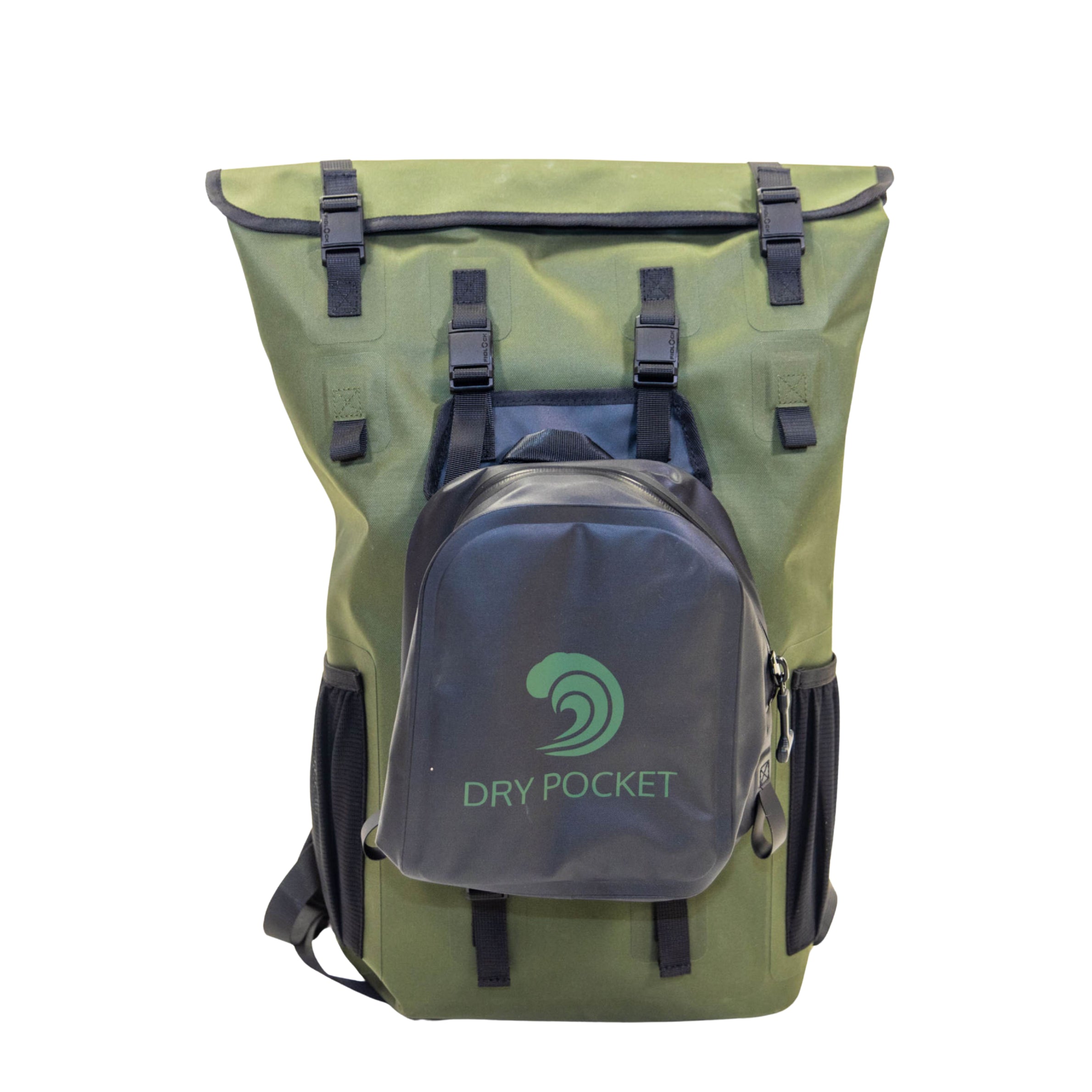
Gear care also matters for dry bags. Our Murphy waterproof floating backpack dry bag with shell bag is one option for keeping wet or sensitive items separate after you have cleaned and dried your gear.
Caring for gear also keeps it out of the landfill. The U.S.
Checklist: The Supplies You Need for Rain Gear Care
Most gear-care guides hand you one supply list and imply it works for everything. It does not.
Baseline supplies for any waterproof item:
- A technical cleaner formulated for waterproof and breathable fabrics (not household detergent)
- A large basin, bathtub, or clean sink
- A soft sponge or microfiber cloth
- A soft-bristled brush for seams, zippers, and tread
Adjust by material and construction:
- Membrane shells (e.g., ePTFE or PU-laminated jackets and rain pants): Use a technical cleaner labeled safe for breathable membranes, and avoid any product with added softeners or brighteners. Rinse aggressively, because residue on a membrane is what kills breathability first.
- Coated fabrics (PU- or PVC-coated rain pants, pack covers, dry bags): These are less breathable and more sensitive to heat and solvents. Skip wash-in DWR products unless the label says they are compatible with coatings, and never use a stiff brush that can abrade the coating.
- Seam-taped garments: Keep the brush soft and work along the tape rather than across it. A technical cleaner is fine, but high heat and harsh scrubbing are what lift tape edges.
- Waterproof footwear: Add a dedicated boot brush, a hose or bucket for rinsing tread, and a conditioner or reproofing product appropriate to leather, synthetic, or membrane-lined boots. Do not use the same wash-in DWR you would put in a jacket.
What to leave out:
Regular laundry detergent, fabric softener, bleach, and anything with optical brighteners. These leave residue that clogs membranes and masks the DWR finish.
Watch out: Never use fabric softener on any waterproof item.
On cleaner choice and disposal: Pick a technical cleaner whose label states it is safe for your fabric type, and follow the dilution on the bottle rather than guessing.
How to Wash a Waterproof Jacket Without Damaging It
Washing a jacket is simple, but a few steps prevent damage. Work through them in order.
Check the care label and prepare the garment
Start by reading the care label. Manufacturers list the washing temperature and the maximum heat for drying. Follow those instructions exactly.
Next, prepare the jacket:
- Empty all pockets and remove any loose items
- Close all zippers and fasten all Velcro tabs
- Brush off dried mud and loose dirt with a soft brush
- Spot-clean oily stains with a little technical cleaner on a cloth
Fastening zippers stops them from snagging the fabric during the wash.
Rinse thoroughly and avoid detergent residue
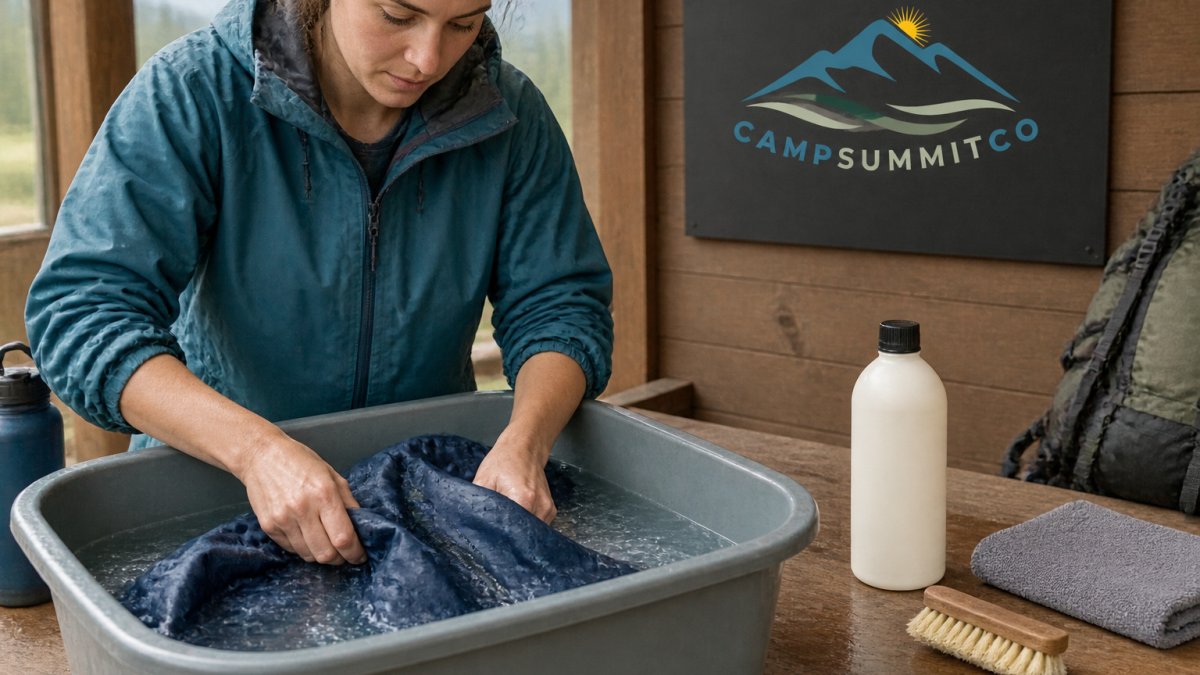
Fill a basin with lukewarm water and add the recommended amount of cleaner. Submerge the jacket, gently press it through the water, and let it soak for a few minutes.
Rinse the jacket two or three times in clean water until no suds remain. Residue left behind is the most common reason a jacket stops repelling water. If you see soapy bubbles, keep rinsing.
Hang the jacket to air-dry or lay it flat on a towel. Do not wring it out, because twisting can damage the membrane.
DWR Treatment for Hiking Gear: When and How to Restore Water Repellency
The DWR finish is the outer coating that makes water bead off. It wears down with use and washing, and you can restore it.
To check whether your gear needs treatment, sprinkle water on the fabric.
Re-treat the DWR when:
- Water soaks into the fabric instead of beading
- The jacket feels damp or cold after light rain
- You have just washed the gear, since washing removes some of the finish
Our guide to re-waterproofing covers the treatment process in detail. Read the product label before you start, since some sprays are only for certain fabrics.
How to Re-Waterproof a Rain Jacket Step by Step
Re-treating a jacket takes about an hour, plus drying time. Follow these steps:
- Clean the jacket first. Treatment bonds only to clean fabric, so wash it as described above.
- Dry it completely. Hang the jacket in a shaded spot until it is fully dry.
- Apply the treatment evenly. Lay the jacket flat on a clean surface. Spray a light, even coat across the outside, working from the top down.
- Focus on high-wear areas. Pay extra attention to shoulders, the hood and the cuffs, since these areas take the most abuse.
- Let it cure. Leave the jacket to dry for the time listed on the product label, usually several hours.
- Test it. Sprinkle water on the fabric. The water should bead up and roll off.
If your jacket still wets out after treatment, you may need to repeat the process. Persistent leaks usually point to a damaged membrane or seam, not a worn DWR.
Drying, Storing and Troubleshooting Wetting-Out and Leaks
Drying and storage decide how long your gear lasts, and troubleshooting decides whether you repair, re-treat, or replace. Work through drying and storage first, then use the diagnostic sequence below when water starts getting through.
Drying by product and heat tolerance
Heat is the biggest risk, but the right drying method depends on the item and its label.
- Membrane shells and rain pants: Air-dry in the shade, or tumble on low heat only if the care label allows it. A short low-heat tumble can help reactivate some DWR finishes, but high heat delaminates membranes and lifts seam tape.
- Coated fabrics and dry bags: Air-dry is safest. Coatings soften and can stick to themselves under heat, and a hot dryer can warp roll-top closures.
- Waterproof footwear: Stuff with newspaper or a drying insert, air-dry away from direct sun and radiators, and never put boots on a hot stove or radiator. Leather uppers need to dry slowly or they crack.
- Backpacks: Empty, open all compartments, and air-dry upside down so water drains out of the bottom and away from the frame.
Watch out: Never machine-dry a waterproof item on high heat. If the label does not explicitly permit low-heat drying, air-dry it.
Storing gear so it stays waterproof
Store everything clean, dry, and loosely folded or hung. Avoid compressing waterproof jackets, tents, and dry bags in tight stuff sacks for months, since long-term compression can weaken coatings and crease membranes. Keep gear out of hot cars and damp basements, and hang jackets on a wide hanger rather than a wire one.
Diagnostic sequence for wetting-out and leaks
When water gets through, do not jump straight to reproofing. Run this sequence in order:
- Is the surface wetting out, or is water actually inside? Sprinkle water on the outside. If it beads, the DWR is working and the problem is elsewhere. If it soaks in and darkens the fabric, the DWR is dirty or depleted.
- Is the garment clean? Dirt, body oils, sunscreen, and insect repellent mask DWR and clog breathability. Wash with a technical cleaner and re-test before treating.
- Is the DWR depleted? If a clean garment still wets out, re-treat the DWR and re-test after curing.
- Is it condensation rather than a leak? Damp patches inside a jacket, especially on the back and sleeves, often come from sweat vapor that cannot escape. Improve ventilation, layer correctly, and check whether the membrane is breathing at all.
- Is it a seam or tape failure? Look for peeling tape, pinholes along seams, and water tracking in at shoulders and hood. Repair with seam sealer or tape before re-treating.
- Is the membrane damaged? Persistent leaks after cleaning, re-treating, and seam repair usually point to a compromised membrane. At that point, repair or replacement is the better choice.
Use this quick reference alongside the sequence:
| Problem | Likely cause | Fix |
|---|---|---|
| Water soaks in quickly | Worn or dirty DWR | Wash, then re-treat |
| Damp patches inside | Sweat or condensation | Improve ventilation, check layering |
| Leak at seams | Damaged seam tape | Repair with seam sealer |
| Dry bag leaks | Dirty or damaged roll-top | Clean seals, check for tears |
| Stiff fabric | Residue buildup | Rinse thoroughly, repeat wash |
| Boots wet through | Worn reproofing or cracked upper | Clean, condition, reproof |
If a leak persists after cleaning and treatment, the membrane may be damaged. At that point, repair or replacement is usually the better choice.
Your Waterproof Gear Maintenance Schedule Before Your Next Trail
A simple schedule keeps your gear ready. Adjust the timing to how often you hike.
- After every trip: Rinse off dirt and mud, and air-dry the gear completely
- Once a month during hiking season: Wash the jacket or pack with a technical cleaner
- Every few washes, or when water stops beading: Re-treat the DWR finish
- Before storage: Clean, dry and store the gear in a cool, dry place
- Once a year: Inspect seams, zippers and seals for damage, and repair as needed
Build these steps into your routine before each trip. A few minutes of care keeps your rain gear working when the weather turns.
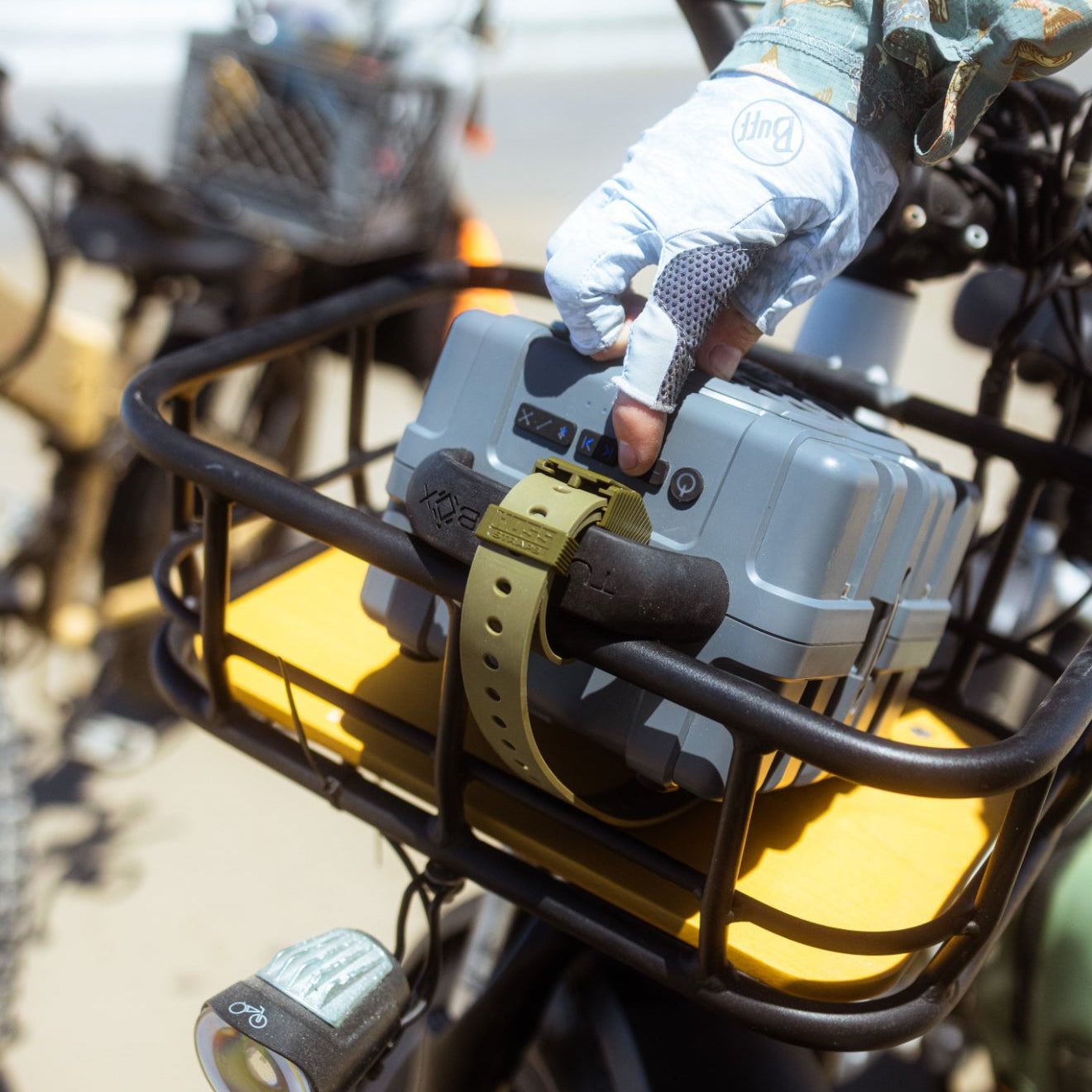
Caring for your gear is part of preparing for any trail. Shop the Gear Straps 24-Inch for secure, reliable strapping that keeps your gear where it belongs on the trail.
Frequently Asked Questions
How often should you re-waterproof a hiking jacket?
There is no fixed schedule, because it depends on how often you hike in rain and how hard you use the jacket. The most reliable sign is wetting out: when water stops beading on the outer fabric and instead soaks in and darkens it, the durable water repellent (DWR) finish has worn down. Test a jacket after each wash and before a wet trip. Many hikers re-treat their rain gear once a season, or sooner if the fabric starts to wet out during a rain shower. Re-waterproofing restores the outer finish but does not repair a damaged membrane, so check for leaks separately.
Can you put a waterproof jacket in the washing machine?
Check the care label first, since it lists the safe washing temperature and drying heat for that specific garment. Close all zippers and fasten Velcro before washing, and rinse thoroughly until no suds remain.
How can you tell when a waterproof jacket needs reproofing?
Watch how water behaves on the surface. If water beads up and rolls off, the DWR is working. If it spreads, soaks in, or the fabric feels damp to the touch during rain, the outer finish has worn off, a process called wetting out. Dirt and oils from body contact often cause this, so washing sometimes restores performance before you need to re-treat. If the fabric is still wet on the inside, the problem may be the membrane or seam tape, which needs a repair rather than a spray-on treatment.
How do you restore the water-repellent coating on a rain jacket?
Start by washing the jacket and rinsing it thoroughly. Follow the instructions on your DWR treatment product, and check that water beads again before your next trip.
