
Best Waterproof Gear for Beach Trips: 2026 Guide
Table of Contents
- What Makes Beach Gear Truly Waterproof?
- Waterproof Beach Bags: Totes, Backpacks, and Coolers
- Beach Dry Bags: How to Choose the Right Size and Closure
- Waterproof Phone Pouch for Beach: Protection That Actually Works
- How to Keep Valuables Dry at the Beach: A Practical System
- Shelter and Sun Protection: Tents, Canopies, and UPF 50+
- Care, Cleaning, and Storage for Saltwater and Sand
- Verdict: Which Waterproof Beach Gear Should You Pack?
- Frequently Asked Questions
Last Updated: October 12, 2026
What Makes Beach Gear Truly Waterproof?
Waterproof means a sealed barrier that keeps water out under pressure; water-resistant fabric sheds splashes but soaks through if submerged. This guide from campsummitco breaks down the best waterproof gear for beach trips by protection level, not marketing language.
Most beach gear fails at the closure, seams, or coating, a bag rated for rain is not rated for a dunking.
IPX Ratings Explained: What the Numbers Actually Mean
IPX ratings come from the IEC 60529 ingress protection standard and describe water exposure only. IPX4 handles splashes. IPX7 survives temporary immersion. IPX8 survives continuous immersion at a depth the maker specifies. An IPX8 airtight seal, like the magnetic closures on our dry bags, holds up to 100 feet deep.
| Rating | Protection Level | Beach Use Case |
|---|---|---|
| IPX4 | Splash-resistant | Light rain, splashes |
| IPX6 | Heavy spray | Boat spray, waves |
| IPX7 | Temporary immersion | Dropped in shallow water |
| IPX8 | Continuous immersion | Submersion, floating gear |
Waterproof Beach Bags: Totes, Backpacks, and Coolers
Waterproof beach bags split into three jobs: carrying dry clothes, protecting electronics, and keeping food cold. A 30L backpack dry bag covers clothing and towels; a sealed tote cooler handles drinks and ice.
The Murphy: A 30L Floating Backpack Dry Bag
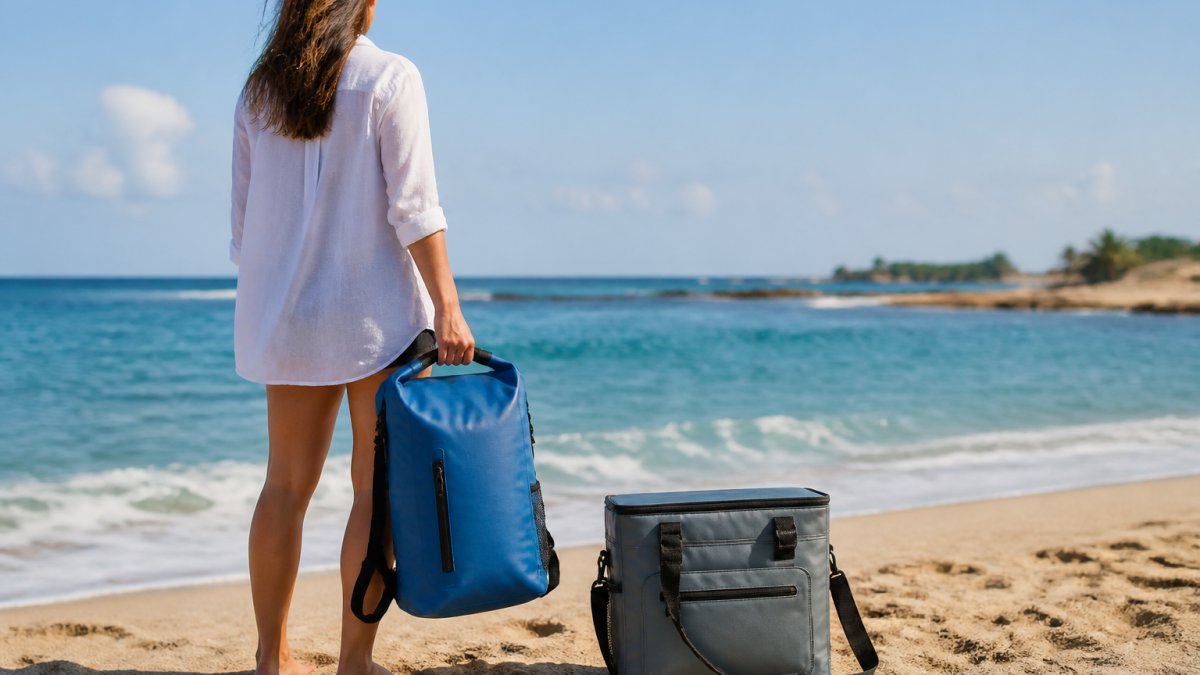
The Murphy is our top pick for one bag that does everything. It holds 30 liters, seals airtight with a magnetic double-lock closure rated IPX8, and floats if it goes overboard. A detachable shell bag with two web pouches clips off via four FIDLOCK magnetic buckles, and padded back straps and carabiner hooks make it a real backpack.
Waterproof Floating Cooler Bag: IPX8 Sealed Tote
The Waterproof Floating Cooler Bag in Bottomland Camo seals with the same IPX8 magnetic auto-sealing closure, holds ice for over 24 hours, and carries 12 cans without ice. Its TPU shell is cut-proof and leak-proof inside, with closed-cell NBR insulation, and it weighs 2.5 lbs empty and floats. Two water-resistant outer pockets, three grab handles and a removable padded shoulder strap make it easy to carry.
Beach Dry Bags: How to Choose the Right Size and Closure
Beach dry bags come in various closure types, including magnetic auto-sealing. Magnetic auto-sealing closures seal airtight in one motion and resist grit. Size by trip length: 10-20L for a day, 30L for a full beach day with towels and spare clothes, 40L+ for family gear. Never trust a dry bag that only claims "water-resistant."
Waterproof Phone Pouch for Beach: Protection That Actually Works
A waterproof phone pouch for beach use is only as good as its weakest seal. Most failures happen at the zip, camera window, or lanyard attachment, not the pouch body. Buy for an IPX8 rating, a touchscreen-compatible window, and a lanyard you would trust over deep water.
What to Look For in a Beach Phone Pouch
- IPX8 seal. IPX7 survives a temporary dunk; IPX8 survives continuous immersion at a maker-specified depth. For beach use, IPX8 is the safer floor because waves and drops do not announce themselves.
- Mechanical closure, not just a zip. A double-lock or fold-and-seal closure with a hard clasp beats a single zip, which can creep open in sand or heat.
- Touchscreen window. Look for a clear TPU or PVC window that allows touch input when wet. Thick windows reduce sensitivity; thin windows tear.
How to Test a Phone Pouch Before the Beach
Test at home before every trip, not just when the pouch is new.
- Dry tissue test. Seal a folded paper towel inside, submerge the pouch in a sink for 30 minutes, then check for moisture. Any dampness means the seal failed.
- Twist and squeeze test. After sealing, twist the pouch gently and squeeze it underwater. This simulates wave pressure and reveals weak seams.
- Lanyard pull test. Hang the pouch by its lanyard with a phone inside and tug firmly. If the attachment point stretches or separates, do not trust it in the water.
- Sand test. Rub a pinch of dry sand along the closure, then seal and submerge. Grit that prevents a full seal is the most common real-world failure.
Phone Pouch vs. Hard Case vs. Dry Bag
A pouch is the lightest option and works for swimming, snorkeling, and wading. A hard waterproof case offers better impact protection but is bulkier and often limits touchscreen use. A dry bag is best for storing a phone you do not need in the water. For camera gear, use a hard case inside a dry bag rather than a pouch alone.
Heat, Salt, and Battery Care
Keep the phone out of direct sun. Heat shortens battery life faster than saltwater damages seals, and a hot phone inside a sealed pouch can build condensation. After a saltwater trip, rinse the pouch in fresh water, dry it fully, and store it open so the closure does not compress. Sunscreen and salt residue break down TPU coatings, so wipe the window with fresh water, not solvent.
Quick Picks by Use Case
- Swimming and snorkeling: IPX8 pouch with a floating lanyard and a mechanical double-lock closure.
- Boat and kayak: Hard case inside a small dry bag, plus a tether to the boat.
- Family beach day: One pouch per adult phone, stored in the floating dry bag when not in use.
A waterproof phone pouch is not a substitute for a dry bag system. It is the last line of defense for the device you use most.
How to Keep Valuables Dry at the Beach: A Practical System
Keeping valuables dry at the beach works best as a layered system, not a single bag. Use three zones: a floating dry bag for items you cannot lose, a sealed cooler tote for food and drinks, and a mesh bag for wet swimwear and towels. Keep the dry bag off the sand on a chair or in your lap, and never leave electronics in a bag sitting in the sun; heat and humidity defeat even good seals over a long day.
Waterproof Floating Cooler Bag - Bottomland Camo →
- Phone and keys in a waterproof solution
- Wallet and documents in the floating dry bag
- Spare clothes in the 30L backpack compartment
Shelter and Sun Protection: Tents, Canopies, and UPF 50+
Sun protection and waterproof shelter often come in the same product. UPF 50+ blocks most UV, and a silver-coated canopy also sheds rain. For families, a beach tent with an extended floor keeps sand out and provides shade. For groups, a larger canopy covers more people with less setup.

Beach Tent Sun Shelter with Extended Floor
The Beach Tent Sun Shelter uses double-layer silver-coated fabric for UPF50+ protection and measures 87" x 59" inside, room for 3-4 people. Thick 8.5mm fiberglass poles resist bending, and 10 ground stakes with wind ropes and sandbags hold it in beach wind. It weighs 6 lbs and packs into a carry bag. At $85.99, it is the practical pick for a family day at the shore.
Waterproof Canopy UPF50+ Sun Shelter for Groups
For groups of 10-12, the Waterproof Canopy UPF50+ Sun Shelter covers 18m² with 210D Oxford cloth and a silver-coated layer rated UPF50+ and 2000mm waterproofing. Thickened 25mm rods resist strong wind, and the upgraded spikes push into sand or grass faster than filling sandbags. At $135.99, it handles a full family reunion or a beach party.
Care, Cleaning, and Storage for Saltwater and Sand
Most beach gear does not fail because it was cheap. It fails because salt, sand, and UV were left on it between trips. Salt crystals abrade TPU and fabric coatings, sand grinds into closures, and UV breaks down coatings and webbing. A simple after-trip routine adds seasons to a dry bag, cooler tote, or phone pouch.
Why Salt, Sand, and UV Are the Real Enemies
- Salt. Salt crystals are abrasive and hygroscopic, pulling moisture into seams and coatings, which can stiffen TPU and corrode metal hardware.
- Sand. Sand is the most common cause of closure failure. A single grain trapped in a magnetic seal or zip can create a gap that lets water through under pressure.
- UV. Prolonged sun exposure degrades coatings, weakens webbing, and fades fabrics. A bag left on a hot beach all day ages faster than one stored in shade.
After-Trip Care: A Step-by-Step Routine
- Empty and shake out sand. Turn every bag inside out and shake it away from the water. Do not rinse sand into the closure.
- Rinse with fresh water. Rinse inside and outside with cool fresh water, paying attention to closures, zips, and hardware. Do not use soap unless the maker recommends it.
- Wipe closures clean. Use a soft cloth to remove grit from magnetic seals, zip teeth, and fold lines. A cotton swab works for tight channels.
- Dry fully, open. Air-dry bags open and upside down in shade. Sealing a damp bag traps moisture and invites mildew.
- Check hardware. Inspect buckles, carabiners, and lanyard loops for corrosion or cracks. Replace anything that looks stressed.
- Store loose. Store bags open and unstuffed. Do not compress a magnetic closure for months at a time.
Material-by-Material Care Notes
- TPU dry bags. Rinse and dry fully. Avoid solvents and hot water. Store open so the coating does not stick to itself.
- NBR and closed-cell insulation. Wipe with fresh water and dry in shade. Do not wring or fold insulation, which can crack the cell structure.
- Magnetic closures. Wipe with a damp cloth and check for grit before every trip. A magnetic seal that will not close flush will leak.
Storage Between Trips
Store gear in a cool, dry place away from direct sun. Keep bags open and unstuffed so air can circulate. Hang canopies and tents loosely rather than compressing them. Keep a small repair kit with spare buckles, a patch, and a soft brush for sand. Label bags by job so the cooler tote does not end up holding wet swimwear.
When to Repair and When to Replace
A dry bag with a stiff closure, a cloudy phone pouch window, or a canopy with a torn stake loop is a candidate for repair. A bag with a cracked seam, a magnetic closure that no longer seals flush, or a coating that flakes off is a candidate for replacement. A quality dry bag lasts many seasons with a simple rinse-and-dry routine; a neglected one may fail within a single summer.
Verdict: Which Waterproof Beach Gear Should You Pack?
Pack by job, not by brand. A floating backpack dry bag like The Murphy covers clothing and electronics; a sealed cooler tote covers food and drinks; a UPF50+ shelter covers the group. Add an IPX8 phone pouch and a mesh bag for wet swimwear, and you have a complete system. Choose IPX8 over "water-resistant" every time, and rinse everything after saltwater exposure.

Frequently Asked Questions
Are dry bags useful for beach trips?
Yes, dry bags are one of the most useful items for a beach trip. They keep wet swimsuits, towels, and electronics separate from dry items, and they protect valuables from sand and saltwater. A roll-top or magnetic auto-sealing dry bag rated IPX8 can be submerged without leaking. Look for one with a detachable shell bag or multiple pockets so you can organize wet and dry gear without mixing them.
How do you keep your phone dry at the beach?
To keep your phone dry at the beach, consider a waterproof solution that seals out water, sand, and salt air while still letting you use the touchscreen. For extra protection, store your phone inside a larger dry bag when you are not using it. Avoid leaving any waterproof solution in direct sun for long periods, as heat can weaken seals over time.
What waterproof gear should I bring on a beach trip?
Pack a waterproof beach bag or dry bag for valuables, a floating cooler bag for drinks, and a sun shelter with UPF 50+ protection. Add quick-drying towels, a mesh bag for wet swimwear, and a water bottle. If you plan to swim or kayak, a floating backpack dry bag adds buoyancy and keeps spare clothes dry. Choose gear with sealed closures rather than zippers for the best water resistance.
How do you protect valuables from sand and water at the beach?
Keep valuables in a sealed dry bag or a waterproof beach bag with a magnetic auto-sealing closure. Sand gets into zippers and mesh pockets, so smooth-sealed bags are easier to wipe clean. Store phones, keys, and wallets in a waterproof solution inside the dry bag. At the end of the day, rinse the outside of the bag with fresh water and dry it fully before storing to prevent salt buildup.
What does IPX8 mean for beach gear?
IPX8 is a waterproof rating that means the item can be submerged in water deeper than 1 metre without leaking. For beach trips, this matters because splashes, waves, and accidental drops into the water are common. Gear rated IPX8, like the floating cooler bag and backpack dry bag from CampSummitCo, seals air and water out with a magnetic auto-sealing closure. Lower ratings like IPX4 only handle splashes, not submersion.
A beach trip does not have to end with a soaked phone and a soggy towel. At campsummitco, we build gear for exactly this problem: our floating backpack dry bags and auto-sealing cooler totes use IPX8 magnetic closures that seal airtight in one motion, and our UPF50+ shelters keep the sun and sand off your setup. Get started with campsummitco and pack for the beach with gear that keeps everything dry.