
7 Reasons Professional Climbing Gear Costs So Much
Last Updated: November 4, 2026
Quick Summary
Professional climbing gear costs so much because you are paying for testing, materials, and low-volume manufacturing, in that order. Every item is life-safety equipment, so certification is a recurring cost and each batch is sampled and pulled to destruction. That certification premium is the single largest hidden cost in climbing gear.
- Spend big on the load-bearing chain: harness, rope, and belay device.
- Retire webbing and slings after roughly five years of use.
- Retire harnesses after five to seven years of regular use.
- A $100 harness lasting six years costs about $17 per year.
- Buy traditional protection one or two pieces per season.
Table of Contents
- What a Rock Climbing Gear Cost Breakdown Actually Shows
- Why Certification and Testing Drive Up the Price
- Climbing Gear Worth Spending Money On
- Best Climbing Equipment for Beginners on a Budget
- How Often Should Climbing Gear Be Replaced?
- Cost Per Use: The Number That Changes the Decision
- Build Your Rack One Purchase at a Time
- Frequently Asked Questions
What a Rock Climbing Gear Cost Breakdown Actually Shows
A full set of beginner rock climbing gear typically runs several hundred dollars, and the reason is simple: every item on a climbing gear cost breakdown is a piece of life-safety equipment, not a fashion accessory. Climbers often ask why the numbers stack up the way they do. Below, we break down where the money actually goes, what certification buys you, and how to build a rack without overspending.
Here is the short answer before the detail: you are paying for testing, materials, and low-volume manufacturing, in that order. A carabiner that holds a fall is not a commodity item, and the price reflects that.
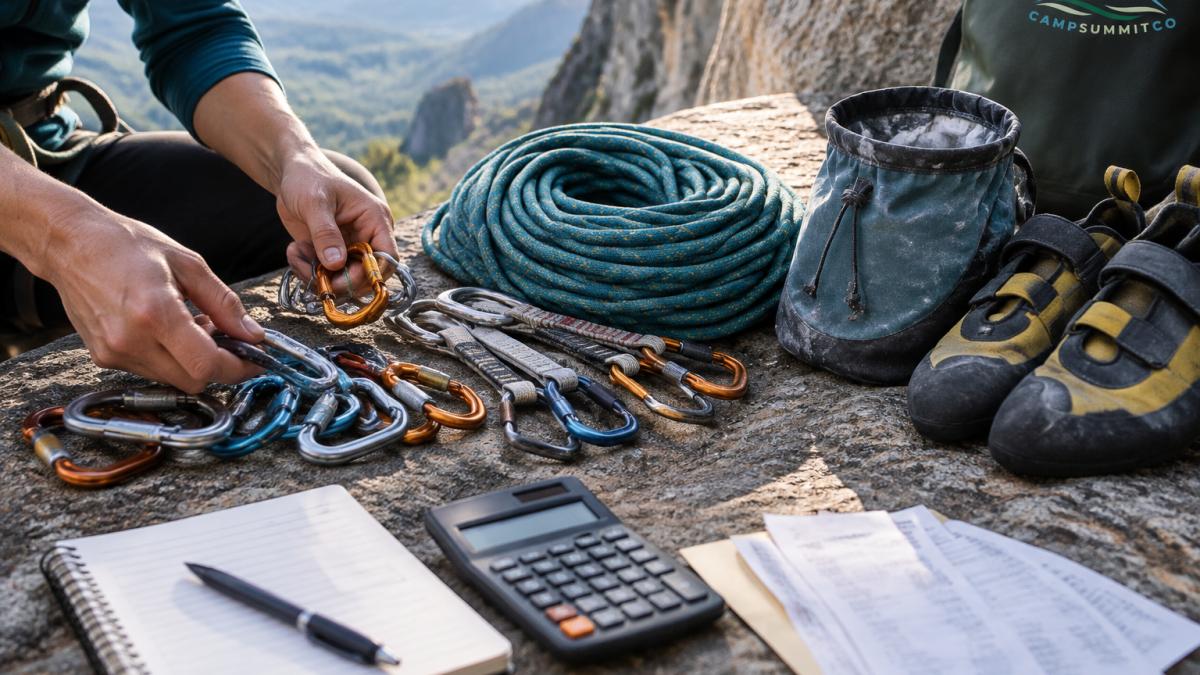
Where the Money Goes on a Single Carabiner
Take one carabiner apart, conceptually, and the price makes more sense. A climbing-rated carabiner carries a marked minimum breaking strength, a gate that has been cycled thousands of times in testing, and a certificate from a third-party testing body. The aluminum alloy is forged rather than cast, the gate mechanism is machined to tight tolerances, and every batch is sampled and pulled to destruction. That testing is not free, and its cost is reflected in the retail price.
You can see the same principle in our own catalogue. The GPCA Carabiner Pro EDC Multi Tool Clip is a good example of a carabiner built for a different job than rock protection, and comparing it against a rated climbing carabiner shows exactly what the certification premium pays for.

Why Certification and Testing Drive Up the Price
Certification is the single largest hidden cost in climbing gear, and it is the one buyers should care about most. Climbing equipment sold in most major markets is generally expected to meet recognized safety standards. Manufacturers also stamp a date of manufacture on soft goods, because rope, webbing and harnesses have a defined service life.
To understand why that matters, it helps to know what the standards actually require.
What most buyers miss is that certification is a recurring cost, not a one-time fee.
A carabiner that has been dropped onto rock can develop micro-fractures that are invisible to the eye, and no visual inspection can confirm it is safe. That is why the major manufacturers recommend retiring any hard good that has taken a significant fall or impact, regardless of how it looks.
Climbing Gear Worth Spending Money On
If you only spend big on three things, spend on the items between you and the ground. Climbing gear worth spending money on comes down to the load-bearing chain: your harness, your rope, and your belay device. These are the components that take the force of a fall, and they are the ones where a marginal saving buys you nothing but risk.
Everything else can be bought more cheaply. Chalk bags, gear slings, and approach shoes are comfort items. A budget chalk bag holds chalk exactly as well as an expensive one.
A useful way to prioritise a first purchase is:
| Item | Spend Level | Why It Matters |
|---|---|---|
| Harness | High | Load-bearing, fit-dependent, long service life |
| Rope | High | Takes every fall, abrasion-critical |
| Belay device | High | Life-safety, cheap to replace, never buy used |
| Climbing shoes | Medium | Performance matters, but entry models climb fine |
| Helmet | Medium | Non-negotiable for outdoor and multi-pitch climbing |
| Chalk bag, slings | Low | Comfort and convenience only |
Our climbing and mountaineering gear range is built around that hierarchy, with rated hardware and soft goods where it counts.
Best Climbing Equipment for Beginners on a Budget
The best climbing equipment for beginners is not the cheapest set available; it is the smallest set that gets you climbing safely while you work out what kind of climber you want to be. Most beginners buy too much too early. A harness, a belay device with a locking carabiner, a chalk bag, and a pair of entry-level shoes will get you through your first season at the gym and your first outdoor top-rope sessions.
If you are shopping on a tight budget, our guide to durable climbing gear for beginners walks through the specific items that hold up without a premium price tag.
8mm Predator™ Standard One Stick/Rappel Kits →
What to Rent Before You Buy
Consider renting shoes and a harness at a climbing gym for your first month. Rental shoes are usually poor, but they teach you what fit feels like, and rental harnesses let you confirm you actually enjoy the sport before committing. Ropes are rarely worth renting for outdoor use; if you are heading outside, go with someone experienced who owns one, or book a guided session.
How Often Should Climbing Gear Be Replaced?
Soft goods have a shelf life even when they sit unused. As a working rule, retire webbing and slings after roughly five years of use and harnesses after five to seven years of regular use, sooner if they show abrasion, fading, or stiffness. Ropes are retired after a serious fall, after visible core damage, or after years of heavy use. Hard goods like carabiners and belay devices last far longer but must be retired after any drop onto rock or any gate damage.
The manufacturer date stamped on the gear is your reference point, not the purchase date. If you buy discounted gear that has sat in a warehouse, you may be starting the clock years late. Our guide on how to choose climbing ropes covers rope inspection and retirement in more detail.
Cost Per Use: The Number That Changes the Decision
Cost per use is the figure that should settle most gear arguments. A cheap harness replaced every two years costs more per climbing day than a well-made one that lasts six. Divide the purchase price by the number of sessions you expect to get out of the item, and the premium option often wins.
Run the maths honestly. If you climb twice a month for five years, that is 120 sessions. A rope that costs twice as much but lasts twice as long costs the same per session, and it performs better on every one of them. This is why we tell beginners to buy the best load-bearing gear they can afford and economise everywhere else.
But cost per use only works if you plan for replacement. Soft goods have a defined lifespan that starts at the manufacturer date, not the purchase date. A harness used regularly should be retired after five to seven years, and a rope after five years of regular use or after a serious fall. That means the true cost of ownership includes the replacement interval, not just the sticker price. A $100 harness that lasts six years costs about $17 per year; a $60 harness that lasts three years costs $20 per year and delivers less comfort and durability along the way.
Inspection is the other half of the equation. Before every climb, run a quick check: look for abrasion, cuts, or glazing on webbing; check that carabiner gates open and close smoothly and that the locking sleeve engages fully; inspect rope for soft spots, core shots, or severe fuzzing. Any gear that fails inspection should be retired immediately, regardless of its age. Keeping a simple log of purchase dates and inspection notes makes it easier to decide when to replace rather than guessing.
A common pattern among experienced climbers is to treat load-bearing gear as a long-term investment and consumables as disposable. Ropes and harnesses are replaced on a schedule; carabiners and belay devices last for many years if they are not dropped or damaged. Shoes are somewhere in between, resoling can extend their life, but the upper and rand eventually wear out. Chalk and tape are pure consumables with no lifecycle cost beyond the purchase price.
The final piece is sharing and renting. Gym memberships often include harness and shoe rental, which lets you defer the purchase until you know you will stick with the sport. For outdoor climbing, a partner who already owns a rope and rack can save you hundreds of dollars in your first season. Cost per use is not just about one item; it is about how you allocate your budget across the gear you need, the gear you can share, and the gear you can delay.
Build Your Rack One Purchase at a Time
Nobody builds a full traditional rack in one order, and nobody should. Traditional climbing protection, including cams, nuts, and hexes, is expensive because each piece is individually rated and tested, and a full rack is a multi-year project for most climbers. Buy one or two pieces per season, learn to place them properly, and let your rack grow with your experience.
If you want alternatives to the standard pieces, our roundup of backcountry alternatives for climbing gear covers options worth considering as your rack develops. Start with passive protection, add active pieces as you gain confidence, and never buy used protection from someone you cannot verify.
Frequently Asked Questions
Why is professional climbing gear so expensive?
Materials also matter: a rope like the 8mm Predator uses a nylon and polyester double braid built to hold knots and resist abrasion, which costs more to make than a general-purpose cord.
Which climbing gear is worth spending more money on?
Spend on anything between you and the ground: harness, helmet, rope and belay device. These are the items where a failure has no recovery, and the price gap between budget and premium is usually modest. Save on chalk bags, gear slings and approach shoes. A useful middle ground is buying rope by the foot from a spool, which lets you size a line to your actual use instead of paying for length you will never uncoil.
How often should climbing gear be replaced?
Follow the manufacturer's stated lifespan and inspect before every use. Soft goods like ropes, slings and harness webbing degrade from UV, abrasion and age, and most makers publish a retirement window even for gear that looks fine. Hard goods such as carabiners and belay devices last longer but must be retired after any significant impact or visible wear. Record the manufacturer date on each item when you buy it so you are not guessing years later.
Can beginners safely use less expensive climbing gear?
Yes, provided the item is certified and within its service life. Certification is not a premium feature, it is the baseline. A budget carabiner that meets the standard is as safe as an expensive one. What you give up at the low end is weight, finish and longevity, not safety. Buy certified gear, check the manufacturer date, and put your money into instruction first, since technique prevents more accidents than equipment upgrades.
The gear costs what it costs because someone tested it, rated it, and staked their name on it holding your fall. That is the trade you are making. If you are ready to build a rack that will last, browse the CampSummitCo climbing range and get started with equipment you can trust on the wall.
