
Best 4 Person Tent for Family Camping: 2026 Picks
Table of Contents
- What Actually Matters in a 4 Person Tent for Family Camping
- Quick Comparison: 4 Person Family Tent Options
- Coleman 4-Person Flatwoods II: Best Value 4 Person Tent
- Sky View XL: Best All-Weather 4-Person Tent for Stargazers
- Weisshorn 12-Person: When a 4 Person Tent With Vestibule Isn't Enough
- Car Camping Tent for Families: Setup, Weight, and Packed Size
- Total Cost of Ownership and Replacement Parts
- Conclusion: Which 4 Person Tent Fits Your Family
- Frequently Asked Questions
Last Updated: October 14, 2026
What Actually Matters in a 4 Person Tent for Family Camping
The best 4 person tent for family camping fits your family's real sleeping setup, not just the number on the box.
The core problem: capacity ratings count bodies lying shoulder to shoulder, not bodies plus gear plus a dog plus a cooler. A tent marketed as a four-person shelter can feel cramped for two adults and two young children once you add bags and bedding.
Below, we'll show you how to judge floor area, peak height, and weather protection before you spend anything, and when stepping up to a larger shelter makes more sense than squeezing into a four-person model.
Sleeping Capacity vs. Real Sleeping Space
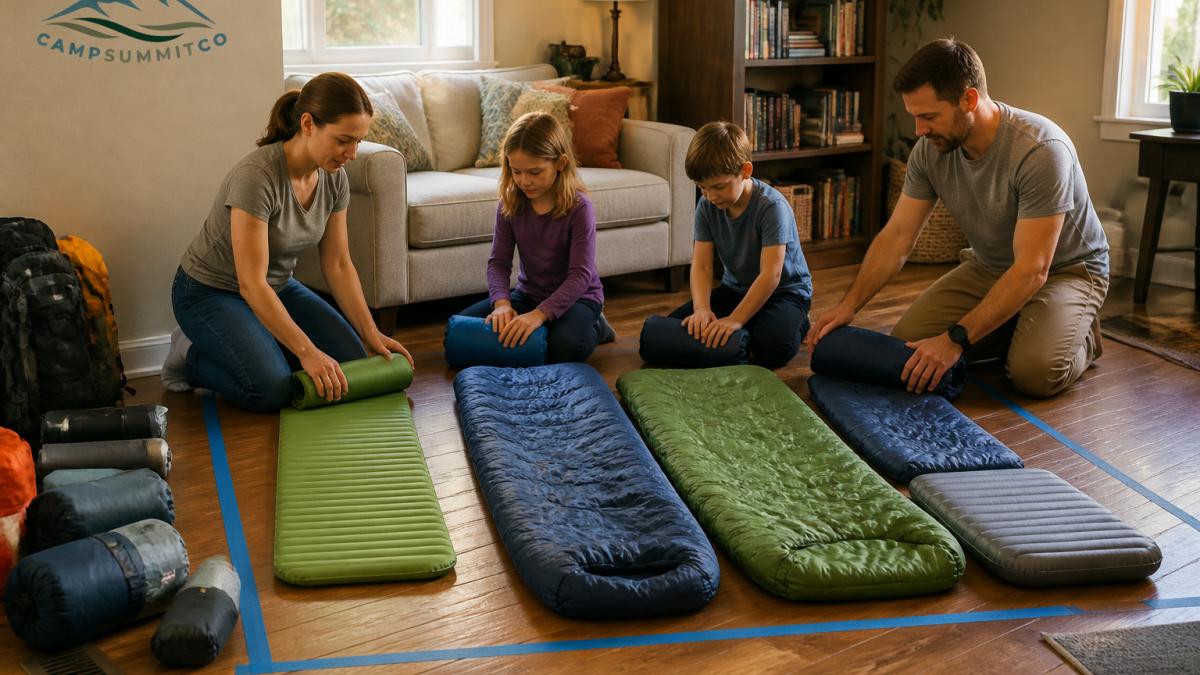
Sleeping capacity is the maximum number of people a tent can hold in sleeping bags with no gear inside. Real sleeping space is what remains once you add pads, bags, and clothes. Those two numbers rarely match.
A four-person tent typically offers a floor area between a queen bed and a king bed.
Here's how to judge it properly:
- Measure your sleeping pads first. Four wide pads need more width than four narrow ones.
- Subtract space for bags, shoes, and a lantern.
- Check peak height against your tallest sleeper. Under 5 feet of headroom means adults will stoop.
- Look for a vestibule or gear loft, which moves clutter off the floor.
- Decide whether you need a room divider for privacy or separate sleeping zones.
The American Camping Association guidance on tent selection makes the same point: capacity ratings describe emergency sleeping density, not comfortable family use. Treat the number as a ceiling, not a target.
Quick Comparison: 4 Person Family Tent Options
Four-person tents sit in a narrow band of the market, and the differences come down to floor area, peak height, weather protection, and packed weight. Here's how the leading options in our range compare.
| Tent | Capacity | Floor Area | Peak Height | Weight | Price | Best For |
|---|---|---|---|---|---|---|
| Coleman Flatwoods II 4-Person | 4 person | 9 ft x 7 ft | 4 ft 11 in | 8.8 lbs | $92.95 | Best value family car camping |
| Sky View XL | 3+ person | 90 in x 90 in | 55 in | 14.1 lbs | $499.00 | All-weather stargazing |
| Weisshorn 12-Person | 12 person | 620 x 244 cm | 190 cm | Not listed | $546.30 | Large groups outgrowing four-person |
| Pakicetus Automatic Shelter | 3/4 person | Not listed | Not listed | Not listed | $89.99 | Quick-pitch weekends |
A four-person tent suits two adults and two small children, or three adults who pack light. Push past that and a larger shelter with a living area serves you better.

Coleman 4-Person Flatwoods II: Best Value 4 Person Tent
The Coleman 4-Person Flatwoods II is our pick for the best value 4 person tent for most families. It fits a queen-size airbed, weighs 8.8 lbs, sets up in about 10 minutes, and costs $92.95.
That combination is hard to beat for car camping.
Where it falls short: peak height is modest, so tall adults will stoop. It's a three-season shelter, not a winter tent, and 8.8 lbs is heavy for anything more than a short walk from the vehicle.
Sky View XL: Best All-Weather 4-Person Tent for Stargazers
If weather protection and night-sky views both matter, the Sky View XL is the strongest all-weather 4-person tent in our range. It pairs a 5000mm waterproof coating with an ultra-clear stargazing mesh, so you stay dry without giving up the view.

The 90 in x 90 in floor and 55 in peak height fit up to three adults or a small family. The patent-pending internal rainfly deploys or retracts from inside the tent in seconds, so you can open the sky without leaving your sleeping bag.
It weighs 14.1 lbs, so it's a car camping tent rather than a backpacking one.
Weisshorn 12-Person: When a 4 Person Tent With Vestibule Isn't Enough
A 4 person tent with vestibule solves storage for small families, but it can't solve space for a large one. When four people become six, or when you want separate sleeping rooms, the Weisshorn 12-Person is the honest answer.

This is a three-room dome tent: two private sleeping rooms on either side of a large center living area. It measures 620 x 244 x 190 cm and is built from heavy-duty UV-resistant 190T 3000mm PU fabric including the floor, with elevated seams for waterproofing.
It costs $546.30 and packs into a 74 x 30 x 30 cm bag. That's a large, heavy shelter, so it suits drive-up campsites, not hike-in trips.
Car Camping Tent for Families: Setup, Weight, and Packed Size
A car camping tent for families should prioritize interior space and weather protection over weight, because you're not carrying it far. The trade-off is packed size, which eats trunk space. But the specs that decide whether a tent is pleasant to live with are the ones most roundups skip: how easy it is to get children in and out, how it behaves at night, and how much setup a parent can do while watching kids.
Coleman 4-Person Flatwoods II Lightweight Dome Camping Tent - Red →
Setup time with children in the mix
Setup time matters double when you're pitching with children underfoot. The Coleman Flatwoods II pitches in about 10 minutes with two adults. The Pakicetus automatic shelter uses a quick-open frame design, which cuts that further for short weekend trips. The Sky View XL uses a simple pole design that suits beginners and experienced campers alike.
A practical pattern many families settle into: one adult pitches the tent while the other manages children and gear. Tents that can be pitched by one person, color-coded poles, clip-on attachments rather than sleeves, make that split far easier. If you'll often camp as a single parent or arrive alone, prioritize a tent one person can raise without help.
Child-friendly entry and nighttime access
Door design is the most underrated family spec. Look for:
- Door height and shape. A tall D-shaped door lets a child walk in upright; a low triangular door forces crawling, which wakes kids and tracks dirt inside.
- Two doors on larger tents. One door per sleeping side means a child needing the bathroom at night doesn't crawl over the whole family.
- A door that stays open. Tents with a tie-back or awning-style door are easier to load gear through and less likely to flap shut on a child's fingers.
- Interior height for dressing. Around 5 ft 11 in to 6 ft at the center lets an adult stand to change a child or adjust bedding.
- Glow-in-the-dark or reflective zipper pulls. Small detail, big difference when finding the door at 2 a.m.
Weight and packed size
Packed weight and size decide how easily the tent travels:
- The Coleman Flatwoods II weighs 8.8 lbs and is easily transportable.
- The Sky View XL weighs 14.1 lbs and includes a footprint.
- The Weisshorn packs into a 74 x 30 x 30 cm carry bag.
- The Pakicetus folds into a compact package for storage between trips.
For families, the rule is simple: if you drive to the site, favor space and weather protection. If you hike in, weight decides. Most family camping is drive-up, so a heavier, roomier tent is usually the better trade.
Season, age, and trip length
How you camp should shift the choice more than any single spec:
- Young children, short trips: Prioritize easy setup, a tall door, and a dark or blackout-style interior for naps.
- Older children, longer trips: Prioritize floor area, a room divider for privacy, and a vestibule for gear.
- Shoulder-season camping: Prioritize a full-coverage rainfly, a bathtub floor, and a higher waterproof rating, a 3000mm-plus coating handles sustained rain better than a basic 1000mm one.
- Changing family needs: A tent that fits a family of four today may not fit them in three years. Buying one size up is often cheaper than replacing the tent mid-life.
REI's guide to choosing a family camping tent
Total Cost of Ownership and Replacement Parts
Total cost of ownership is the price of the tent plus everything it needs over its life: a footprint, stakes, seam maintenance, and replacement parts. Families who ignore this end up paying twice.
Start with what's included. The Sky View XL ships with a footprint, hardened steel stakes, and free shipping, removing two common add-on costs. The Coleman Flatwoods II includes a rainfly and a one-year limited warranty.
Then budget for the consumables:
- A groundsheet or footprint to protect the floor
- Spare stakes, since soft ground bends them
- Seam sealer for older tents
- A repair patch kit for mesh and fabric tears
Buying a tent with a warranty and included accessories usually costs less over five years than a cheaper tent you replace twice. That's the case for spending a little more up front on a shelter built to last.
Conclusion: Which 4 Person Tent Fits Your Family
The right 4 person tent for family camping comes down to how you camp, not how many bodies the box claims it holds. For most families car camping on a budget, the Coleman 4-Person Flatwoods II at $92.95 is the value pick, with a queen-size airbed footprint, 10-minute setup, and WeatherTec protection.
Choosing a family tent is a question of honest measurement: your sleeping pads, your tallest sleeper, and the weather you actually camp in. CampSummitCo carries shelter solutions built for that decision, from lightweight dome tents to all-weather stargazing shelters, alongside waterproof dry bags and navigation gear for the rest of your kit.
Frequently Asked Questions
Is a 4 person tent big enough for a family of four?
A 4 person tent fits four adults sleeping side by side, but comfort depends on floor area and peak height. The Coleman 4-Person Flatwoods II offers a 9 ft x 7 ft floor and a 4' 11" center height, which fits one queen-size airbed. For a family with young children, that works well. For four adults with gear, expect tight quarters and consider a larger model.
What features should I look for in a family camping tent?
Prioritize floor area, peak height, and weather protection. Look for a rainfly, welded corners, and covered zippers. Ventilation matters too: mesh windows and a double-wall design reduce condensation. The Coleman Flatwoods II includes a tub floor with welded corners and protected seams, while the Sky View XL adds a 5000mm waterproof coating and dual vestibules for gear storage.
What is the best all-weather 4-person tent for camping?
The Sky View XL Tent handles changing conditions with a 210D ripstop polyester shell and a 5000mm waterproof coating. Its patent-pending internal rainfly lets you deploy or retract it from inside the tent, which helps during sudden rain. It also includes a footprint and hardened steel stakes. For three-season camping, the Coleman Flatwoods II is a lighter, lower-cost option.
Are cabin tents or dome tents better for family camping?
Dome tents like the Coleman Flatwoods II pitch faster and shed wind better, making them a solid choice for weekend trips. Cabin-style tents offer more headroom and room to stand, which suits longer stays. The Weisshorn 12-Person tent uses a dome structure with two private sleeping rooms and a center living area, giving families both sleeping privacy and shared space.
How long does it take to set up a 4 person tent?
Setup time varies by design. The Coleman 4-Person Flatwoods II sets up in about 10 minutes with its dome pole structure. Automatic and quick-open tents can pitch faster but may sacrifice packed size. The Sky View XL uses a simple pole design that works for beginners. Practice pitching at home once before your trip to cut setup time at the campsite.