
Lightweight Shelter Solutions for Backpacking
Table of Contents
- Lightweight Shelter Solutions for Backpacking: What Matters
- Choosing the Right Ultralight Backpacking Tent
- When a Backpacking Tarp Shelter Makes Sense
- Backpacking Shelter Weight: The Complete System
- Ultralight Tent vs Tarp: A Decision Framework
- Weather Protection, Ventilation, and Condensation
- Materials, Durability, and Long-Term Costs
- Frequently Asked Questions
Last Updated: October 9, 2026
Lightweight Shelter Solutions for Backpacking: What Matters
The best lightweight shelter solutions for backpacking balance trail-ready weight, weather protection, and livability. That balance shifts depending on whether you're a solo thru-hiker or splitting gear with a partner, and it changes again once you factor in stakes, guylines, and poles. We see the same pattern in every gear conversation: hikers fixate on the tent's advertised weight and ignore the complete shelter system. Below, we break down how to choose between trekking-pole tents, tarps, and freestanding options, and how to calculate what your shelter actually weighs on the trail.
Most backpackers carry between 20 and 30 pounds total, and shelter is typically one of the three heaviest items in the pack. Shaving weight here has an outsized effect on how far you can comfortably hike in a day.
Choosing the Right Ultralight Backpacking Tent
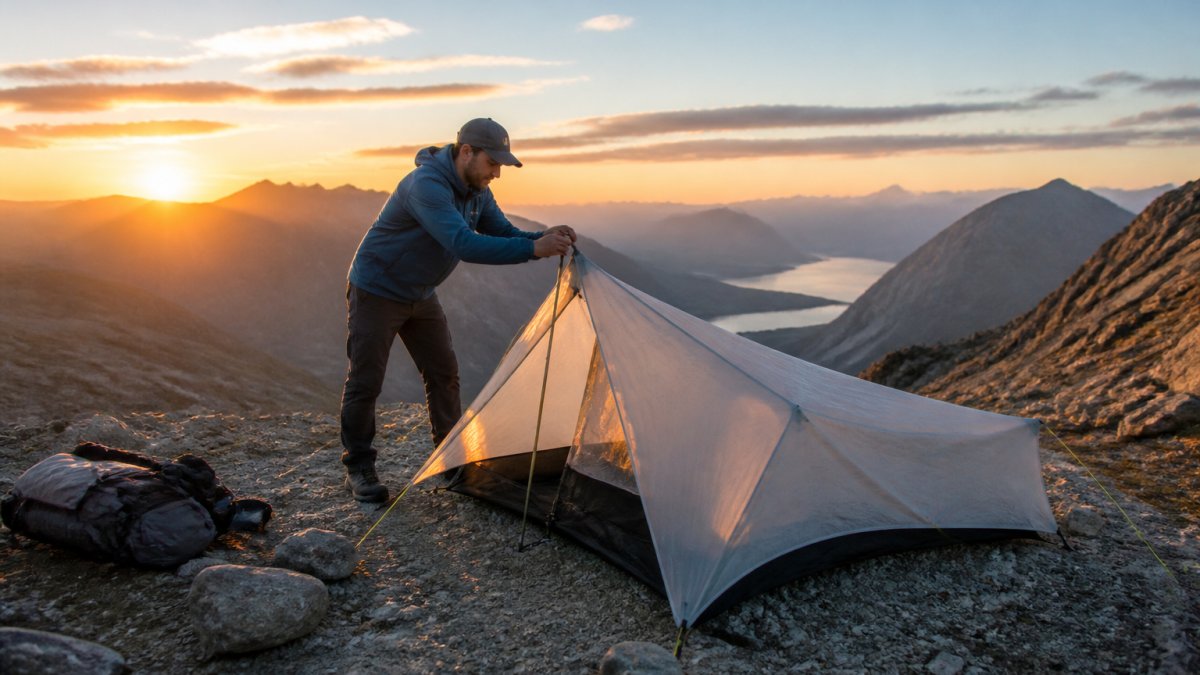
An ultralight backpacking tent sheds weight by using trekking poles, minimal fabric, and simplified structure instead of a heavy freestanding frame. The trade-off is convenience for grams, so understand what you're giving up before you buy.
For most solo backpackers, a trekking-pole tent is the best starting point. It eliminates the aluminum or fiberglass pole set you'd otherwise carry, and it pitches fast once you've practiced the setup at home. The Leave No Trace guidelines for backcountry camping are worth reading before your first trip, since site selection affects how well any shelter performs.
Solo vs. Two-Person Options
Solo shelters prioritize packed size and weight. Two-person shelters add interior space and livability, and the weight penalty is often smaller than you'd expect because occupants split the load.
For solo trips, the Trekker Tent 1A is a bivy-style trekking pole tent for minimalist adventurers who want quick setup and a compact pack size. The Trekker Pyramid takes a different approach: a pyramid shape weighing just 2 lbs that gives one person room for gear, still pitched with trekking poles.

For pairs, the Trekker Tent 2.2 offers over 7 feet of length and 5 feet of width, with micro-mesh sidewalls and integrated side vents to move air. The 2-Person Easy Setup Rainproof Tent uses a DOME cross-pole structure with two 7001-series aluminum poles, which suits beginners who want a freestanding pitch.
| Shelter | Sleeps | Setup Type | Best For |
|---|---|---|---|
| Trekker Tent 1A | 1 | Trekking pole | Minimalist solo trips |
| Trekker Pyramid | 1 | Trekking pole | Solo with gear space |
| Trekker Tent 2.2 | 2 | Trekking pole | Two hikers, humid climates |
| 2-Person Easy Setup | 2 | Freestanding | Beginners, variable ground |
| Naturehike 2-3 Person | 2-3 | Freestanding | Sun exposure, group trips |
When a Backpacking Tarp Shelter Makes Sense
A backpacking tarp shelter is the lightest option in most packs, and it's the right call when you're confident about weather and site selection. Tarps demand more skill: read wind direction, find natural anchors, and pitch a shape that sheds rain without pooling.
The case for a tarp is simple: it's lighter than any enclosed tent, packs smaller, and ventilates better because you control airflow. The case against it is equally simple: bugs, splash, and wind-driven rain.
Many thru-hikers pair a tarp with a bivy sack or bug net inner to get the weight savings without giving up protection. That combination can be lighter than a full tent, but it takes practice to pitch quickly in bad weather.
Backpacking Shelter Weight: The Complete System
Backpacking shelter weight is the total mass of everything required to pitch and sleep under your shelter, not just the tent body: canopy, inner tent or bug net, poles or trekking poles, stakes, guylines, and any footprint or groundsheet.
Here's how to calculate your real number:
- Weigh the shelter body and inner on a kitchen scale
- Add the pole set, or the weight of the trekking poles if the shelter uses them
- Count your stakes and multiply by their individual weight
- Add guylines, stuff sack, and any footprint
- Add repair tape and a small stake bag
A shelter advertised at 2 lbs can easily become 2.5 to 3 lbs once you include a full stake set and footprint. That difference matters on a multi-day trip where every ounce compounds.
For reference, the Ultralight 1-Person Poleless Tent weighs 0.86 kg with a pack size of 33x14x14 cm, which is a useful benchmark for a solo shelter that includes its own structure. The Trekker Pyramid sits at 2 lbs before stakes and guylines.

Ultralight Tent vs Tarp: A Decision Framework
The ultralight tent vs tarp decision comes down to four variables: expected weather, bug pressure, campsite terrain, and how much time you want to spend pitching. Neither option wins universally.
Use this framework, organized by the conditions you're most likely to face:
Dry, predictable climates with low bug pressure (desert Southwest, high alpine summer, late-season Sierra). A tarp is the clear winner: you save weight, get unlimited ventilation, and can pitch a flat or A-frame shape in minutes. Pair it with a groundsheet and head net for the occasional mosquito. The risk is splash and wind-driven rain, so pitch with the low edge into the wind and avoid exposed ridges.
Humid, bug-heavy summers (Appalachians, Midwest, Southeast). A trekking-pole tent with a full mesh inner is worth the weight penalty. The Trekker Tent 2.2's 1.5-layer design with micro-mesh sidewalls is built for exactly this scenario.

Wind-exposed terrain above treeline (Rockies, Cascades, Scottish Highlands). Structure matters more than weight.
Rock, sand, or platforms where stakes won't hold (Joshua Tree, alpine slabs, hut platforms). A freestanding tent is the only reliable option.
Snow loading and winter conditions. A four-season shelter adds pole structure, stronger fabrics, and often a solid inner to block spindrift.
Hammock and bivy considerations. A hammock solves the rocky-ground problem and can be comfortable in humid climates, but it requires trees, insulation underneath, and a tarp overhead.
The gap most guides miss is site selection. Before you blame your shelter, look at where you pitched it. Leave No Trace guidelines for backcountry camping cover campsite selection in detail, and the principles apply directly to how well any shelter performs.
Trekker Tent 1A | 1-Person Backpacking Tent →
U.S. National Park Service backcountry camping guidance
Weather Protection, Ventilation, and Condensation
Condensation ruins more nights than rain does.
Here's what works, based on how condensation actually forms:
Pitch for cross-ventilation, not just a view. A shelter with two openings on opposite sides moves more air than one with a single door. If your tent has a high vent and a low vent, open both, the temperature difference drives airflow even without wind. The Trekker Tent 2.2 uses a 1.5-layer design with expanded micro-mesh sidewalls and integrated side vents to keep air moving without exposing you to rain.
Choose your campsite with condensation in mind. Low-lying areas near water, meadows, and valley floors collect cold, moist air; ridges and slopes with good drainage stay drier.
Manage your own moisture. Your breath and body put out a surprising amount of water vapor overnight.
Use a double-wall or mesh inner when humidity is high. A full mesh inner tent, like the one in the Ultralight 1-Person Poleless Tent, lets moisture pass through and blocks mosquitoes at the same time.
Storm-pitching technique matters as much as the shelter. Pitch with the low end into the wind, stake guylines at a low angle to shed gusts, and use rocks or deadman anchors if stakes won't hold.
Ventilation beats waterproofing when it comes to a dry night. A shelter that breathes will keep your bag drier than one that simply blocks rain.
Materials, Durability, and Long-Term Costs
Shelter fabric choice drives weight, price, and lifespan. Nylon is the workhorse: light, packable, and available from 15D to 40D, with lower denier meaning less weight and less abrasion resistance.
Silicone-coated nylon, common in the tents we carry, balances water resistance with durability. The 2-Person Easy Setup Rainproof Tent uses 20D single-sided silicone-coated nylon, a fabric that holds up to regular use without adding much weight.
Long-term ownership costs come down to repairability. A shelter you can patch with tape and reseal at the seams will outlast one you can't.
Budget tiers to think about:
- Entry: basic trekking-pole or freestanding tents, adequate for occasional trips
- Mid-range: lighter fabrics, better ventilation, more refined pitches
- Premium: Dyneema and ultralight construction, lowest weight at highest cost
Spending more buys weight savings and longevity, not necessarily more comfort. Decide which matters more for how often you actually get out.
REI expert advice on choosing a backpacking tent
The hardest part of choosing lightweight shelter solutions isn't the research, it's committing to a system and learning it before your trip.
Frequently Asked Questions
What is the lightest shelter for backpacking?
The lightest option is typically a tarp or trekking pole shelter. For example, the Ultralight 1-Person Poleless Tent weighs 0.86 kg and packs to 33x14x14 cm. A bivy-style trekking pole tent like the Trekker Tent 1A also keeps weight low. Tarps shed the most grams but offer less bug protection and weather coverage. Your choice depends on how much protection you need versus how much weight you are willing to carry.
Are tarps lighter than tents for backpacking?
Yes, a backpacking tarp shelter usually weighs less than a tent because it has no poles, no floor, and often no mesh inner. However, the gap narrows when you add stakes, guylines, and a groundsheet. A trekking pole tent like the Trekker Pyramid at 2 lbs closes much of that gap while offering full enclosure and bug protection. Weigh the complete system, not just the main fabric.
What should I look for in an ultralight backpacking tent?
Focus on trail-ready weight, packed size, and weather protection. Check the hydrostatic head of the fly and floor, ventilation features like mesh sidewalls, and whether the tent needs a separate footprint. The Trekker Tent 2.2 uses a 1.5-layer design with micro-mesh sidewalls and a puncture-resistant floor that does not require an extra ground cloth. Also confirm the interior fits your sleeping pad and gear.
How much should a backpacking shelter weigh?
For solo trips, aim for a complete shelter system under 1.5 kg including stakes and guylines. Two-person setups can stay under 2.5 kg. The Trekker Pyramid weighs 2 lbs (about 0.9 kg) for the tent body, and the Ultralight 1-Person Poleless Tent comes in at 0.86 kg. Add roughly 100-200 g for stakes and guylines. Packed weight matters more than the number on the box.
Is a one-person tent suitable for thru-hiking?
A one-person tent works well for thru-hiking if it balances weight, durability, and livability. Look for a shelter that sets up fast, handles condensation, and survives regular pitching on varied terrain. The Trekker Tent 1A is a bivy-style trekking pole tent built for minimalist adventurers. The Trekker Pyramid offers more interior space for gear. Both keep trail-ready weight low for long-distance hiking.
Are ultralight tents durable enough for regular backpacking?
Modern ultralight tents use fabrics like 20D silicone-coated nylon and reinforced stress points to handle regular use. The Ultralight 1-Person Poleless Tent has 50-85N tear resistance and 2 mm wind lines for stability. The Trekker Tent 2.2 uses a puncture-resistant floor that does not need a footprint. Durability depends on site selection and care, not just fabric weight.
What is the best lightweight shelter for backpacking in bad weather?
For storm resistance, a trekking pole tent with a full-coverage fly and strong guyline points performs better than an open tarp. The Trekker Tent 2.2 has high-visibility guyline points for stable pitching on rocky or exposed sites. Check waterproofing ratings: 2000 mm on the fly and 3000 mm on the groundsheet, as found on the Ultralight 1-Person Poleless Tent, handle sustained rain. Pitch in sheltered terrain when possible.