
Best Dog Agility Training Equipment to Buy
Last Updated: November 21, 2026
Quick Summary
The best dog agility training equipment matches your dog's size, your available space, and your training goals rather than being the biggest catalogue. Start with one adjustable jump, ground poles, and a long line to test whether your dog enjoys the work before buying a full course. Measure your yard's usable length, your dog's shoulder height, and your dog's off-leash recall reliability first.
- Set the jump crossbar at your dog's elbow height to start, then raise it gradually.
- Beginners should choose weave poles with guide wires that hold them vertical while the dog learns.
- For large dogs, look for a crossbar range of roughly 20cm to 65cm and jump widths around 1.2m to 1.5m.
- Build jumps, ground poles, and a pause table yourself, but buy the A-frame, dog walk, teeter, and tunnels.
- The most common budget mistake is buying a full course before the dog has proven it enjoys the work.
Table of Contents
- Choosing Dog Agility Equipment That Fits Your Dog and Your Yard
- Jumps and Hurdles: The Core of Any Agility Course
- Weave Poles, Tunnels, and Contact Obstacles Explained
- The Best Dog Agility Training Equipment for Large Dogs
- The Best Dog Agility Training Equipment for Small Dogs
- Dog Agility Equipment DIY: What You Can Build and What to Buy
- Budget Tiers and Total Course Cost
- Safety Checks and Progressive Training Before You Buy
- Frequently Asked Questions
Choosing Dog Agility Equipment That Fits Your Dog and Your Yard
The best dog agility training equipment is the gear that matches your dog's size, your available space, and your training goals, not the biggest catalogue. Training gear for active dogs and their owners works best when it is chosen to fit the dog, and most first-time buyers are better off starting small until they understand their dog's stride and confidence level.
Agility training guides a dog through obstacles, jumps, tunnels, and contact equipment, to build speed, focus, and handler communication. Before buying a full course, measure three things: your yard's usable length, your dog's shoulder height, and how reliably your dog recalls off-leash. That last one matters more than any obstacle.
Below, we break down each equipment category, what to buy first, and how to avoid mistakes that turn a backyard course into a storage problem.
| Your Situation | Start With | Add Later |
|---|---|---|
| Puppy under 12 months | Ground poles, low hurdles | Full-height jumps, weave poles |
| Small yard under 10m | Single tunnel, one adjustable jump | Weave poles, pause table |
| Large breed, high drive | Sturdy adjustable jumps, A-frame | Teeter, dog walk |
| Indoor or winter training | Place board, wobble board | Tunnel, tire jump |
Jumps and Hurdles: The Core of Any Agility Course
Jumps are the first obstacle most handlers buy, and for good reason: one adjustable hurdle teaches more than a shed full of gear. A movable crossbar lets you raise height in small steps, building confidence instead of knocking it down.
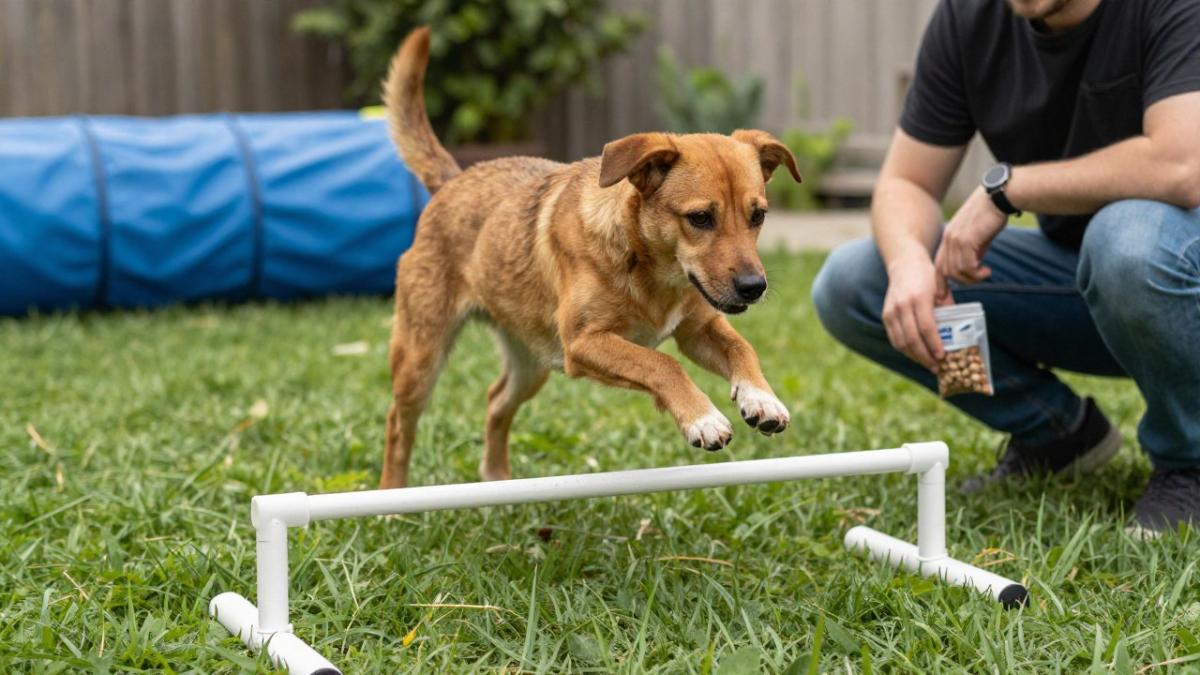
Set the crossbar at your dog's elbow height to start, then raise it gradually. Jumping straight to competition height in week one can be a mistake, since a dog bumped hard by a too-high bar may become hesitant about jumping.
Hurdle types you'll see:
- PVC hurdles: light, cheap, easy to move, best for beginners
- Aluminum hurdles: stiffer and more weather-resistant, better for permanent outdoor setups
- Adjustable crossbar jumps: the most versatile single purchase
- Obedience jumps: solid panels rather than bars, useful for Schutzhund-style work
Check stability every session. A wobbling upright spooks dogs, and a tipped hurdle is a trip hazard for both of you.
Weave Poles, Tunnels, and Contact Obstacles Explained
Weave poles, tunnels, and contact obstacles separate a real course from a few jumps in the grass.
Weave poles are a line of upright poles the dog slaloms through. Beginners should look for poles with guide wires that hold them vertical while the dog learns the pattern.
Tunnels build speed and confidence. A short, open tunnel suits nervous dogs; a longer, curved tunnel adds difficulty later. Secure both ends so the tunnel cannot roll.
Contact obstacles are the A-frame, dog walk, teeter (seesaw), and pause table. These require the dog to touch a marked zone at the base of each ramp.
Here's what most guides miss: contact equipment is where cheap construction shows up fastest. Thin ramps flex under a fast dog, and flexing ramps teach hesitation.
The Best Dog Agility Training Equipment for Large Dogs
For large dogs, the decision comes down to three variables: load rating, adjustability range, and footprint stability. A 30kg dog landing from a 60cm jump generates far more force than most beginner kits absorb, and gear that works for a terrier will shift, flex, or tip under a big breed. If your dog is large, buy with its adult weight in mind so you are not replacing gear early.
Contact obstacles. The A-frame, dog walk, and teeter are where cheap construction shows up fastest. Thin ramps flex under a fast, heavy dog, and flexing ramps teach hesitation.
Tunnels. A rigid hoop at the entry keeps the tunnel open when a large dog drives through at speed. Fabric weight matters too: lighter material rolls and bunches under a big dog's paws, while heavier rip-resistant fabric holds its shape.
Weave poles. Spacing should suit the dog's stride; large breeds generally need wider spacing, and poles set too close force a choppy, slow rhythm.
Foundation gear before obstacles. A place board gives a large, high-drive dog a clear target and teaches impulse control, which is exactly what keeps a fast dog from blowing past contact zones. The Hunting Dog Training Place Board supports weight up to 200 pounds (not a step for use by humans), has a raised "H" rubber traction surface, and has non-skid rubber feet. The Canny Long Training Line comes in a 23 ft length for medium to large dogs, with a soft, padded neoprene handle and two integrated grab points for control at distance.
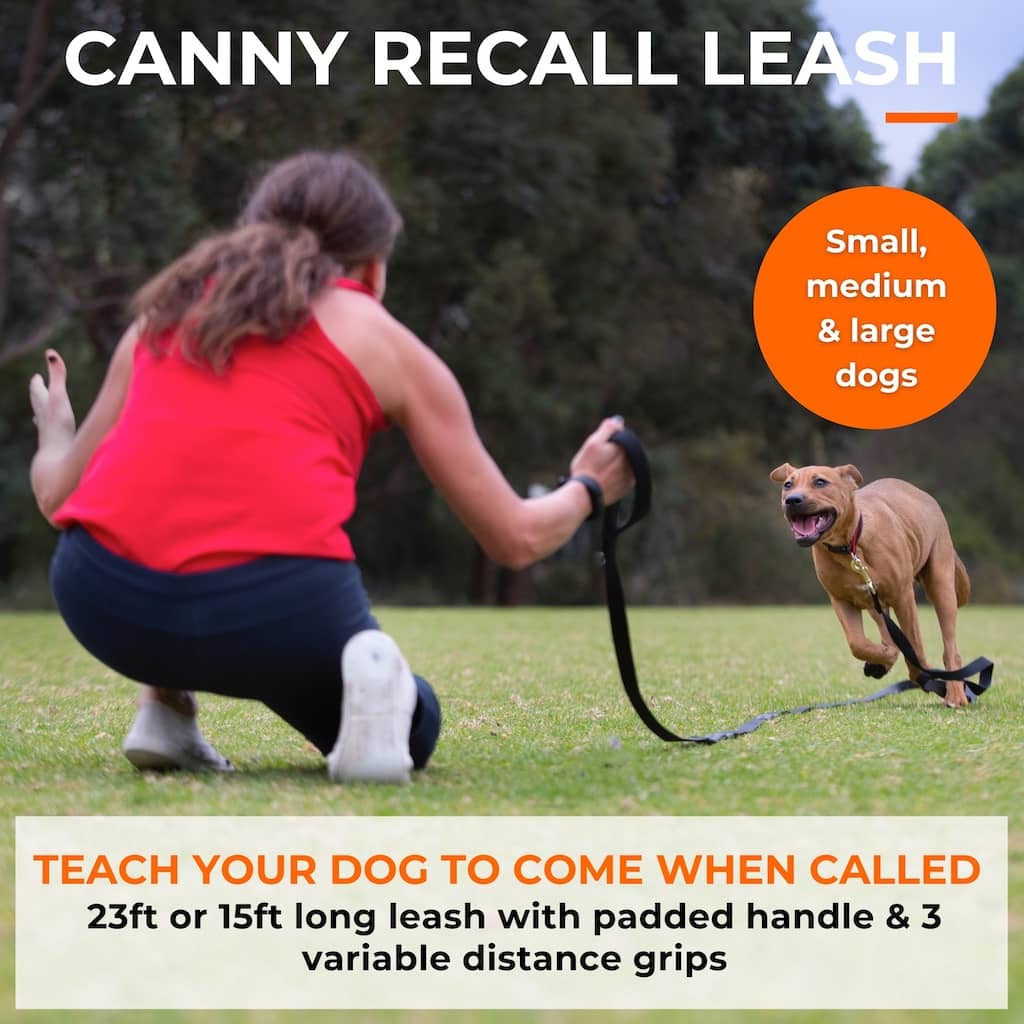
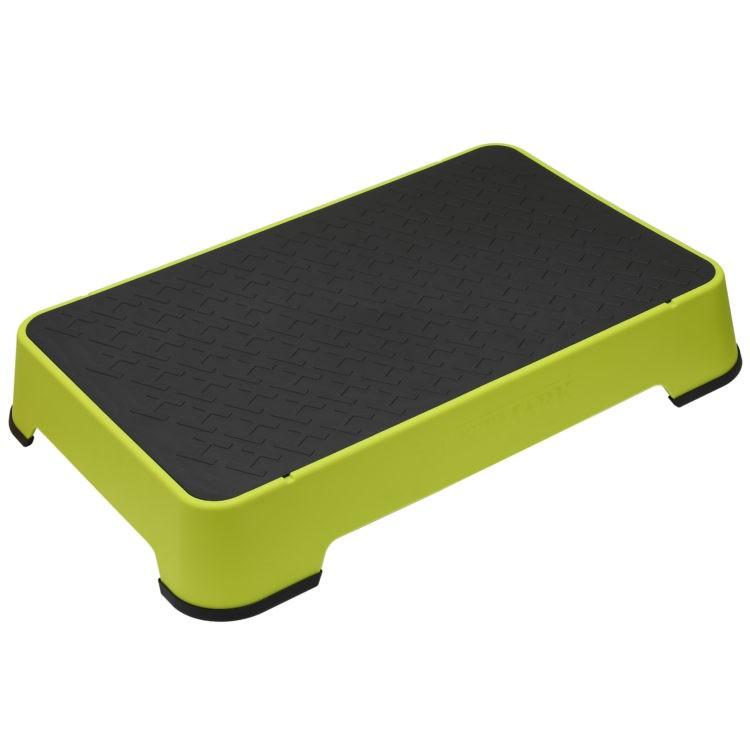
Watch out: a large dog bumped hard by a too-high bar or a wobbling upright may become hesitant around that obstacle, so set heights conservatively and check stability every session.
The Best Dog Agility Training Equipment for Small Dogs
Small dogs and puppies need lower heights, lighter obstacles, and shorter distances between them. A jump that starts at 20cm is useless for a Chihuahua-cross; look for hurdles with a low minimum setting and tunnels sized to the dog's shoulder height.
Weave pole spacing should be tighter for small breeds, and guide wires help enormously. Contact obstacles are often too steep for tiny legs, so start with a wobble board or low training plank instead of a full A-frame.
The 15 ft version of the Canny Long Training Line is sized for small dogs and puppies, which makes it a practical option for recall work before you introduce obstacles. For general obedience and warm-up work, a simple cotton lead can be enough, and the Four Paws Cotton Web Dog Training Lead - Black has a solid bronze swivel snap and is recommended for obedience training, walking, and general exercise.
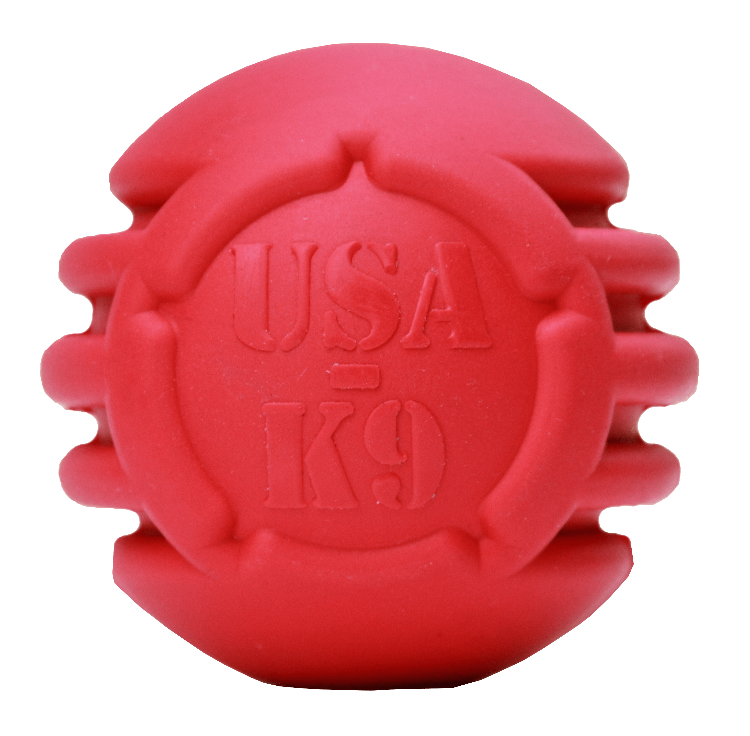
Keep sessions short. Small dogs tire quickly and lose focus, and five good repetitions beat twenty sloppy ones.
Best for: puppies and dogs under 10kg, plus indoor training. Skip if: you're already competing at standard height.
Dog Agility Equipment DIY: What You Can Build and What to Buy
You can build jumps, ground poles, and a pause table yourself with PVC pipe and fittings. These are the safest DIY projects because they involve no height, no moving parts, and no dog weight-bearing on a raised surface.
Buy rather than build when the equipment carries the dog's weight or moves under it:
- A-frame and dog walk: load-bearing ramps need proper bracing and grip
- Teeter: the pivot and balance point are hard to get right, and a badly balanced seesaw frightens dogs
- Tunnels: stitched, rip-resistant fabric is difficult to replicate
- Weave poles with guide wires: the base and wire tension matter for safety
A sensible DIY budget covers ground poles, a pause table, and wing standards. Spend the saved money on a well-made tunnel and one good adjustable jump. If you want a broader starting point on gear categories, our guide to the best dog agility training gear for outdoors covers the wider kit list.
Budget Tiers and Total Course Cost
Agility costs scale with how much you build versus buy, and how seriously you train. Figures below are rough guides rather than quotes; check current prices before you buy.
| Tier | What You Get | Typical Cost Range | Trade-Off |
|---|---|---|---|
| Starter | One adjustable jump, ground poles, long line | Low | Cheapest entry; you build the poles and learn whether the dog enjoys the work |
| Backyard | Jump, tunnel, weave poles, pause table | Mid | Mix of bought and DIY; tunnel and weave poles are the purchases that matter |
| Full course | A-frame, dog walk, teeter, full jump set | High | Contact equipment is the expensive part; buy it, do not build it |
| Competition-grade | Regulation-dimension contact obstacles, full jump set, competition tunnel | Highest | Only worth it once you are entering trials; dimensions must match the rulebook |
Starter tier. One adjustable jump, a set of ground poles, and a long line cover foundation work and test the dog's interest.
Backyard tier. Add a tunnel, weave poles, and a pause table.
Full course. The A-frame, dog walk, and teeter carry the dog's weight and move under it, so buying rather than building is usually the safer choice.
Competition-grade. Once you enter organized trials, dimensions and specifications must match the sanctioning organization's rulebook, and recreational gear may not. Competition-grade equipment is usually worth considering only once you are actually competing.
Training accessories like a durable reward toy belong in every tier.
Safety Checks and Progressive Training Before You Buy
Run this checklist before you buy, and again before every session:
- Measure your dog's shoulder height and set bars at elbow height or lower to start
- Check every upright for wobble and every base for sharp edges
- Confirm tunnel ends are secured and the fabric has no tears
- Verify contact equipment has grip on the ramps and a stable footprint
- Clear the run-out area of stones, holes, and hard surfaces
- Warm up with ground poles or a place board before obstacle work
- End on a success, not a failure
Progressive training means adding one new element at a time: height, distance, or speed, never all three together. A dog that fails repeatedly learns to avoid the obstacle, and rebuilding that confidence takes far longer than going slowly would have.
If you're unsure where to start, the place board and long line combination covers foundation work, impulse control, and recall before you introduce a single jump. That order is not glamorous, but it's the one that produces reliable agility dogs.
The hardest part of agility training isn't buying equipment, it's sequencing it correctly so your dog builds confidence instead of fear.
Frequently Asked Questions
What is the best equipment for agility training?
Start with adjustable jumps, a tunnel, and six weave poles. These three cover the core skills: jumping form, confidence in enclosed spaces, and rhythm. Add contact obstacles like an A-frame or teeter once your dog is comfortable with the basics. For recall work between obstacles, a long training line such as the Canny Long Training Line (15 ft for small dogs, 23 ft for larger ones) keeps your dog attached while giving room to run.
At what age should a dog start agility training?
Puppies can start foundation work at 8 to 12 weeks with flat ground exercises, wobble boards, and low training planks. Full-height jumps and weave poles should wait until growth plates close, usually around 12 to 18 months depending on breed size. Large and giant breeds mature later than small ones. Before that point, use tunnels, low hurdles, and recall practice to build confidence without stressing joints.
What dog agility equipment works best for large dogs?
Large dogs need wider jumps, sturdier bases, and more spacing between obstacles. Look for jumps with adjustable crossbars and sturdy bases. The Hunting Dog Training Place Board supports weight up to 200 pounds (not a step for use by humans) and has non-skid rubber feet.
Can you make dog agility equipment yourself?
Yes, jumps, weave poles, and pause tables are common DIY projects. PVC pipe, fittings, and spray paint cost less than manufactured sets and work well for backyard practice. Weave poles need a consistent base so they stay upright when brushed. Tunnels and contact obstacles are harder to build safely, so buying those makes more sense. Check that any DIY jump has a displaceable crossbar that falls off on contact rather than a fixed bar.
How much does a full backyard agility course cost?
CampSummitCo training tools include a cotton web training lead at $16.97 and a hunting dog training place board at $82.50. Build in stages: buy the obstacles your dog uses most, then add contact equipment once basic handling is solid.
